

The Wood-Fired Oven: One Piece of Equipment, Half the Menu

Key Takeaways
- A wood-fired oven shapes three separate sections of Sofia's menu — the USDA Prime dry-aged steaks, the pizzas, and the Pollo al Limone. One fire, three very different jobs.
- Live fire does things gas and electric can't: higher peak temperatures, radiant heat from the oven's own mass, and a faint hardwood smoke that ends up in the crust and on the skin.
- Read a menu for the phrase. When a kitchen writes "wood fired" at the top of a section rather than burying it, the equipment is central to how they cook rather than a marketing line.
Read the Menu Header
Sofia's Butcher Shop section opens with three words before it lists a single cut: wood fired.
The pizza section says the same. So does the Pollo al Limone.
That repetition isn't stylistic. It's a kitchen telling you that one piece of equipment is doing a substantial share of the work, and that the results across three unrelated sections share a common origin.
What Live Fire Actually Does
Three things separate a wood-burning oven from a conventional one, and each shows up on the plate.
Heat, and a Lot of It
A wood fire reaches temperatures a domestic oven can't approach. That ceiling is what makes fast, hard cooking possible — a crust that forms in seconds rather than minutes.
For a steak, that means a deep sear develops before the interior overcooks. For a pizza, it means the dough puffs and blisters before it dries out. Both depend on getting an enormous amount of energy into the surface of the food quickly.
Radiant Heat From the Oven Itself
A wood oven's floor and dome absorb heat and radiate it back. Food cooks from the fire, from the stone beneath it, and from the mass of the oven around it, all at once.
That surrounding heat is why the wood-oven version of a dish reads differently from the grill version. A grill cooks from one side; a wood oven cooks from every direction.
The Smoke
Burning hardwood puts a faint smoke character into everything the oven touches. It's subtle — closer to a background note than a barbecue flavor — but it's there, and it's the element that's hardest to replicate any other way.
Job One: The Steaks
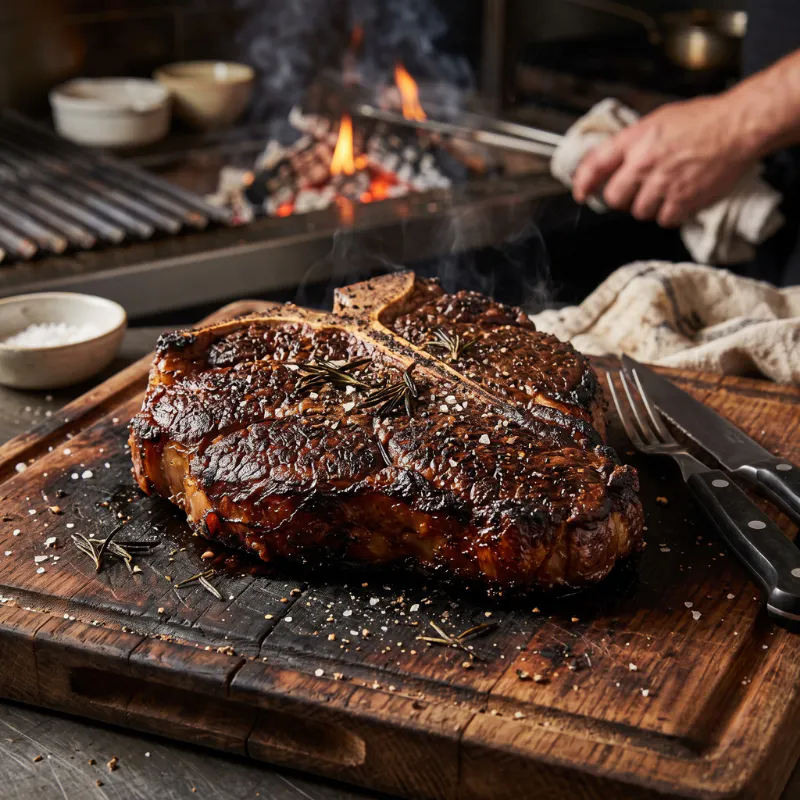
Sofia's Butcher Shop runs hand-selected USDA Prime dry-aged cuts, and the oven is what finishes them.
Dry-aged beef presents a specific problem. Weeks of aging remove moisture and concentrate flavor — the process our guide to dry-aging walks through — which means there's less water in the meat to protect it from overcooking. A dry-aged steak needs heat that works fast.
Live fire delivers exactly that. The surface caramelizes hard while the interior stays where you asked for it, and the smoke adds a dimension a broiler doesn't produce.
The scale matters too. The oven handles an 8 oz filet and a Porterhouse for two, which have completely different thermal demands. A cook who can manage both in the same fire is doing something a thermostat can't.
Job Two: The Pizza
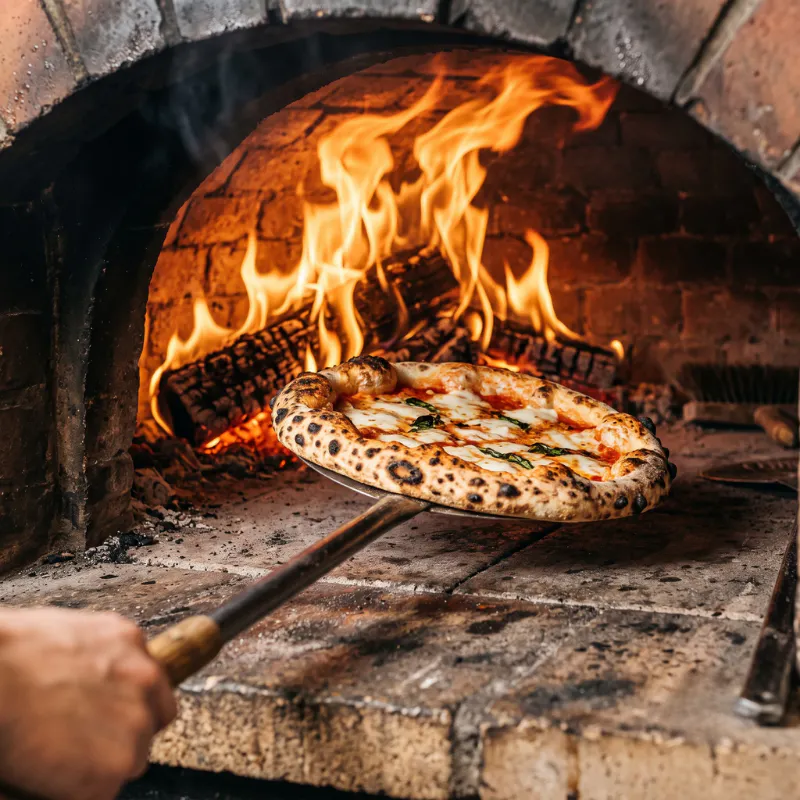
The same oven turns out four pizzas on the lunch menu, and here the fire is doing the opposite kind of work — not a hard sear on a dense protein, but a fast bake on a thin disc of dough.
A pie cooks in a couple of minutes. The rim puffs, blisters, and leopard-spots; the center stays thin and tender; the cheese melts before the base dries. None of that is achievable at conventional oven temperatures, where a pizza spends long enough inside to dry out before it browns.
Our wood-fired pizza guide covers the four pies in detail. The relevant point here is that the pizzas exist because the oven does. A steakhouse that invested in live fire for its beef has, incidentally, bought the ideal pizza oven.
Job Three: The Chicken
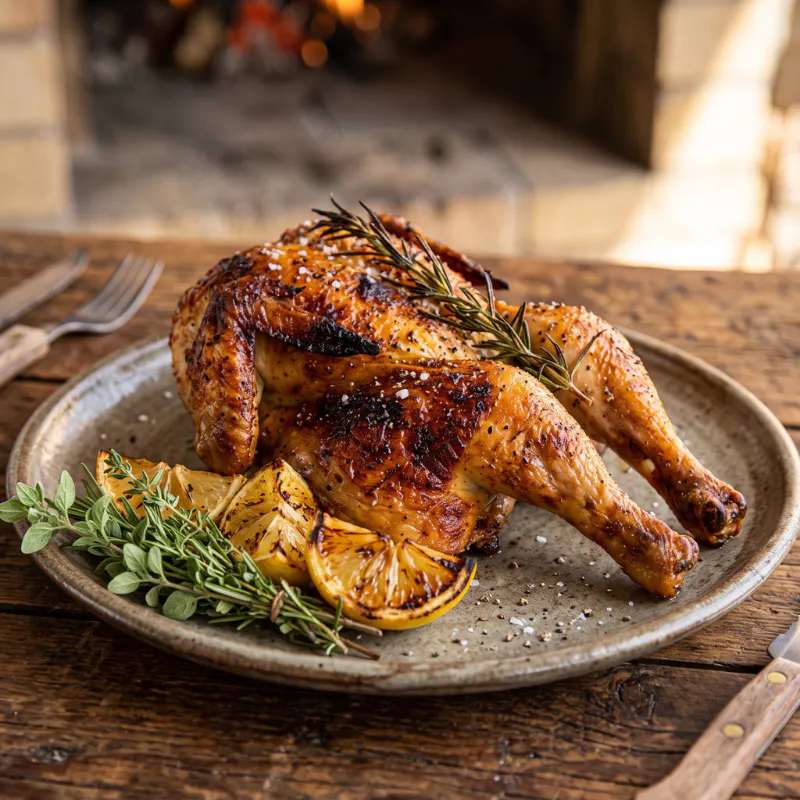
The Pollo al Limone — wood-fired, marinated, half organic chicken from Giannone farm — is the quietest of the three and arguably the best demonstration.
Chicken is unforgiving. It has to reach a safe internal temperature, which usually means the skin has surrendered long before the meat is ready. Dry chicken with pale, flabby skin is the standard failure.
A wood oven solves it through surround-heat. Radiant heat from the dome crisps and renders the skin while the bird cooks through, rather than forcing you to choose. The result is the version of roast chicken most home cooks are chasing and rarely reach.
Ordering it is also a reliable way to judge a kitchen. Anyone can sell a Porterhouse. A great roast chicken is harder and less glamorous.
Three Jobs, One Fire
Dish | What the fire is doing | The result |
Dry-aged steaks | Hard, fast sear on a dense protein | Deep crust, interior held at temperature |
Pizza | Very fast bake on thin dough | Puffed, blistered rim; tender center |
Half chicken | Surround-heat roasting | Crisp rendered skin, meat cooked through |
The versatility is the point. One piece of equipment, three fundamentally different cooking problems, all solved by the same fire managed differently.
Why Most Restaurants Don't Have One
Wood ovens are a genuine commitment, which is why they signal something.
They require the physical space and structural support for a masonry oven, ventilation that satisfies commercial code, an ongoing hardwood supply, and — hardest of all — cooks who can read a fire. There's no dial. Managing a wood oven means understanding where the hot spots are, how the fire has shifted over a service, and how to move food around inside it.
A kitchen that takes that on is making a choice about how it wants to cook, and it's the same category of choice as dry-aging in-house or making pasta by hand. Each one is harder than the alternative and produces a better result — which is broadly what separates fine dining from expensive dining, a line our casual vs. fine dining guide traces.
How to Order Around the Oven
Order across it. A wood-fired pizza to start and a wood-fired steak to follow puts the same fire on the table twice, in two completely different registers.
Order the chicken at least once. It's the least obvious thing on the menu and one of the most telling.
Order steak medium-rare or medium. The whole argument for cooking Prime dry-aged beef over live fire is the crust-to-interior contrast. Past medium, you've paid for a technique you then cooked away.
Pair it accordingly. Fire and smoke want structured reds — the Super Tuscans and Barolos our wine pairing guide covers hold up where lighter bottles get flattened.
Quick Questions
What does wood-fired mean on a menu?
Wood-fired means the dish is cooked in an oven or over a fire burning hardwood, rather than gas or electricity. Live fire reaches higher temperatures, radiates heat from the oven's own mass, and imparts a faint smoke character to the food.
Why is a wood-fired oven better for steak?
A wood oven's high heat forms a deep crust quickly, before the interior overcooks. That speed matters especially for dry-aged beef, which has lost moisture during aging and is less forgiving of slow cooking. The hardwood also adds light smoke.
Can the same oven cook pizza and steak?
Yes. A wood-burning oven handles both, along with roasted meats — the cook adjusts placement, fire size, and timing for each. At Sofia in Englewood, the same wood oven cooks USDA Prime dry-aged steaks, four pizzas, and a half chicken.
Why don't more restaurants have wood-fired ovens?
Wood ovens require significant space, structural support, commercial ventilation, a steady hardwood supply, and cooks trained to manage a live fire without temperature controls. The cost and skill involved keep most kitchens on gas or electric.
What is Pollo al Limone?
Pollo al Limone is a marinated lemon chicken dish. Sofia serves a wood-fired, marinated half organic chicken from Giannone farm, where the oven's radiant heat crisps the skin while the meat cooks through.
Where can I find wood-fired cooking in Bergen County?
Sofia, a fine dining Italian steakhouse in Englewood, NJ, uses a wood-burning oven across its menu — for hand-selected USDA Prime dry-aged steaks, four lunch pizzas, and its Pollo al Limone.
About Sofia Englewood
Sofia is a fine dining Italian steakhouse in downtown Englewood, NJ, recognized by NJ Digest for "timeless elegance coupled with modern culinary excellence." A wood-burning oven anchors the kitchen, cooking hand-selected USDA Prime dry-aged steaks, four wood-fired pizzas, and the Pollo al Limone made with Giannone farm chicken. The menu also features house-made pasta, daily-flown seafood, a raw bar with caviar service, and a curated Italian-and-American wine list.
For reservations and private events, call (201) 541-8530 or book online. Full menus and hours and location are on the site.