

Whole Fish, Explained: Why a Fine Dining Kitchen Cooks It on the Bone

Key Takeaways
- Ordering a whole fish at a fine dining restaurant gets you a better version of the same animal. Bone and skin hold moisture in and add flavor that a bare fillet loses on the pan.
- Wild caught means the fish comes from a specific place, and the place shows up on the plate — Florida red snapper, Atlantic black sea bass, and Greek branzino each eat differently.
- Two preparations, two very different meals. Grilled keeps the fish clean and smoky; livornese buries it in the tomato, olive, and caper sauce of the Tuscan coast.
The Fillet Problem
Most restaurant fish arrives as a rectangle. Skinless, boneless, portioned to a uniform weight, easy to cook and easier to eat.
Convenient — and diminished. Stripping a fish down to a bare fillet removes the two things doing the most work: the skeleton and the skin.
A fine dining kitchen that cooks fish whole is choosing the harder path on purpose, because the results are better. Here's the mechanics of why.
What the Bone and Skin Actually Do
Bone Holds Heat and Slows Cooking
The skeleton conducts heat gently through the fish from the inside, so the flesh cooks more evenly than a naked fillet slapped on direct heat. It also shields the meat closest to it, which is why the flesh along the spine of a whole fish is the sweetest, most tender part of the animal.
Collagen in the bones and joints breaks down as it cooks, adding body and a faint richness the fillet version never develops.
Skin Is a Wrapper
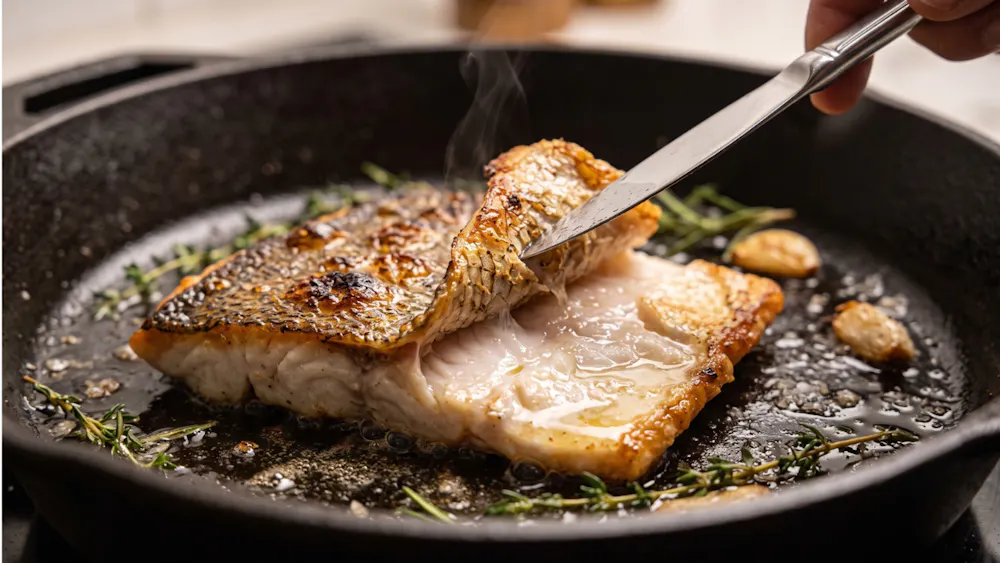
Skin seals moisture in. A whole fish essentially steams inside its own jacket while the outside chars, which is why whole fish stays juicy at temperatures that would dry out a fillet.
Crisped over live fire, that skin becomes the best bite on the plate — salty, blistered, and worth eating rather than pushing aside.
The Head Matters Too
Roasting a fish with the head on keeps the cheeks and collar intact. Both are small, and both are prized — the collar in particular is fatty, tender, and the piece a chef quietly takes for themselves.
Three Fish, Three Places
Sofia's Whole Market Fish section lists three wild-caught options, and each one is named for where it comes from rather than a generic category.
That naming matters. Wild fish tastes like its water in the same way oysters do — a point our oyster guide works through in more depth.
Red Snapper, Florida. The firmest and most substantial of the three. Snapper has a clean, faintly sweet flesh that holds together under heat, which makes it the sturdiest choice and the one that stands up best to a heavy sauce.
Black Sea Bass, Atlantic. Delicate, mild, and slightly buttery, with fine flakes. The most elegant of the three and the one that rewards the simplest treatment.
Branzino, Greece. The Mediterranean classic. Mild, lean, moderately sweet, and almost universally likeable — the whole fish for someone who has never ordered one before. Sofia also serves a Mediterranean branzino filleted and oven-roasted with seasonal vegetables for anyone who wants the fish without the bones.
Grilled or Livornese
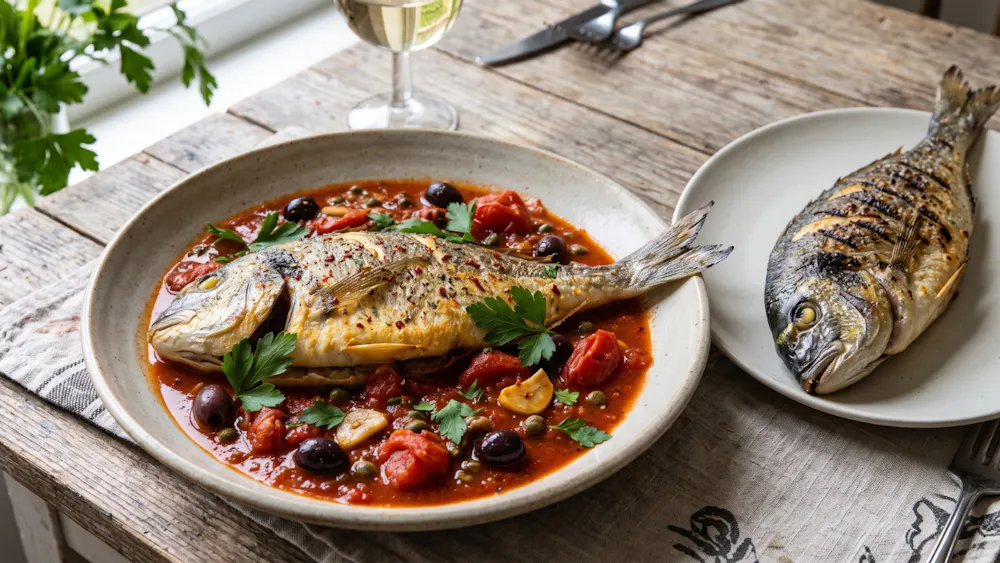
The whole market fish comes prepared one of two ways, and the choice shapes the entire dish.
Grilled
The purist's order. Live fire, char on the skin, and very little between you and the fish itself.
Grilling is the preparation that exposes quality — no sauce to hide behind, nothing to cover up a fish that isn't fresh. It's also the one that best showcases the differences between the three species, so it's the right call if you want to taste what a Florida snapper is versus a Greek branzino.
The same wood fire that runs Sofia's dry-aged steak program does this job, which is a meaningful advantage — hardwood heat gives fish skin a char that a flat-top can't.
Livornese
The Tuscan coastal preparation, from the port city of Livorno. Tomato, olives, capers, garlic, white wine — briny, acidic, and assertive.
Livornese is what fishermen's cooking looks like when it's done properly. The sauce is built to complement seafood rather than mask it, and the acidity cuts the richness of the fish. Choose it when you want the fuller, more Italian plate rather than the clean grilled version.
Quick rule of thumb: grilled for the delicate fish and a light meal, livornese for a bigger, saucier plate and for the firmer snapper that can carry it.
How to Order It Without Overthinking
Whole fish intimidates people who've never ordered one. It shouldn't.
Ask How It's Served
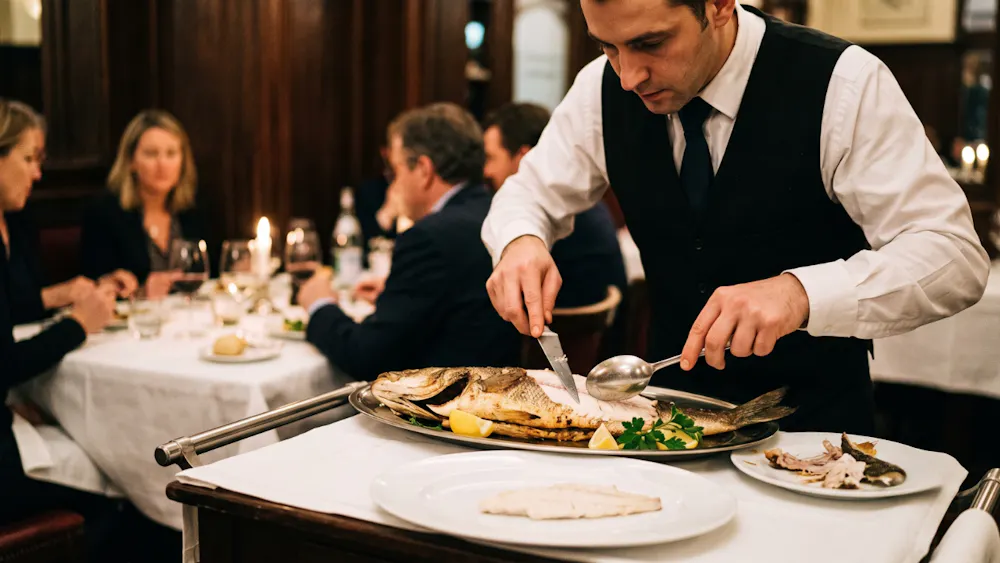
Some kitchens portion the fish off the bone before it reaches you; others bring it whole and break it down at the table. NJ Digest's review of Sofia describes a whole snapper being filleted tableside, so it's worth asking your server what to expect for the fish you're ordering.
Either way, the work gets done for you. Ordering a whole fish does not mean being handed a skeleton and wished luck.
Eating It, If You're On Your Own
The technique is simple. Run a knife or fork along the spine to open the top fillet, lift it away in one piece, then lift the whole skeleton off from the head end. Underneath is a second clean fillet.
Watch for pin bones near the collar and along the belly. Eat the skin. Try the cheek.
Sharing It
Whole fish is naturally a dish for two. One fish, two fillets, split down the middle — which makes it a strong order for a date or a celebration dinner where sharing is part of the point.
What to Drink With It
Whole fish wants a wine that stays out of its way. Bright, dry, unoaked.
Preparation | Reach for |
Grilled, delicate fish | A crisp Italian white — Vermentino, Gavi, Greco di Tufo |
Grilled, with char | Something with more mineral cut — Chablis or Sancerre |
Livornese | A white with body to meet the tomato, or a very light red |
Any of them, celebrating | Champagne, which works with nearly all seafood |
Skip the big Cabernets. A structured red flattens a delicate fish, and the tannin turns metallic against seafood. Our Italian wine pairing guide covers where those bigger bottles do belong.
Why Whole Fish Signals a Serious Kitchen
Whole fish is a commitment. It requires sourcing quality wild fish consistently, storing and handling it properly, cooking a variable-sized animal to temperature without a portioned weight to work from, and having staff who can serve it competently.
Restaurants that don't want the difficulty buy fillets. A kitchen offering three wild-caught whole fish is signaling something about its standards — the same signal as an in-house dry-aging program or house-made pasta, and part of what our casual vs. fine dining guide works through.
Quick Questions
Why is whole fish better than a fillet? Cooking a fish whole keeps the bone and skin intact, which holds moisture in and adds flavor. The bone conducts heat gently for more even cooking, the skin seals in juices and crisps, and the flesh nearest the spine stays the sweetest part of the fish.
What does livornese style mean? Livornese is a preparation from Livorno on the Tuscan coast, built on tomato, olives, capers, garlic, and white wine. Briny and acidic, it's a traditional Italian seafood sauce designed to complement fish rather than mask it. Sofia in Englewood offers its whole market fish grilled or livornese style.
Does a restaurant fillet the whole fish for you? Usually, yes. Many fine dining kitchens either portion the fish off the bone before serving or break it down at the table. Ask your server how a given fish is served — ordering whole fish does not mean deboning it yourself.
What whole fish does Sofia serve? Sofia, a fine dining Italian steakhouse in Englewood, NJ, serves three wild-caught whole market fish: Red Snapper from Florida, Black Sea Bass from the Atlantic, and Branzino from Greece, each available grilled or livornese style.
What wine goes with whole fish? Crisp, dry, unoaked whites pair best — an Italian Vermentino or Gavi, a Chablis, or a Sancerre. Champagne works with nearly any seafood. Avoid big tannic reds, which overwhelm delicate fish and turn metallic against it.
Is whole fish enough for two people? Often, yes. A whole fish yields two fillets and is a natural dish to share, which makes it a good order for a couple or for a table splitting several dishes.
About Sofia Englewood
Sofia is a fine dining Italian steakhouse in downtown Englewood, NJ, recognized by NJ Digest for "timeless elegance coupled with modern culinary excellence." The Whole Market Fish selection features wild-caught Red Snapper from Florida, Black Sea Bass from the Atlantic, and Branzino from Greece, served grilled or livornese style. The kitchen also serves wood-fired USDA Prime dry-aged steaks, house-made pasta, a raw bar with oysters and caviar service, and a curated Italian-and-American wine list.
For reservations and private events, call (201) 541-8530 or book online. Full menus and hours and location are on the site.