

What a Menu's Length Tells You

Key Takeaways
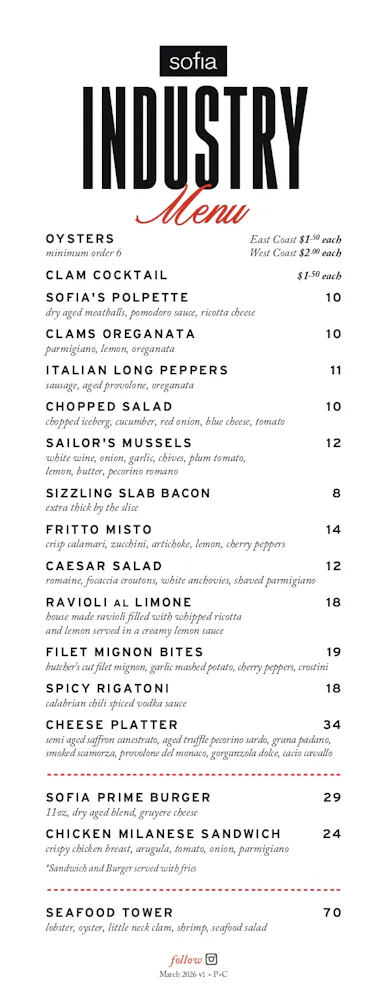
- Kitchens are cutting back. James Beard's 2026 forecast found operators focusing menus on fewer things done well, partly for quality and partly to streamline work for staff.
- A long menu is rarely generosity. Every additional dish means more ingredients held, more prep, and more chances something sat too long before it reached you.
- Menu descriptions are shortening too, with chefs reporting simpler wording — no fluff, just real food with a story behind it.
The Illusion of Choice
A long menu feels like a gift. Everything you might want, all in one place, nobody at the table disappointed.
The reality behind the page is less flattering. Every dish on a menu requires ingredients held in inventory, prep time before service, and a station that knows how to execute it under pressure. Multiply that across sixty dishes and something has to give — usually freshness, usually on the items nobody orders.
The industry has been arriving at this conclusion for a while. James Beard's 2026 forecast reported operators focusing on fewer things done well, noting it helps streamline workflow for staff as well as improve what reaches the table. One chef quoted described smaller menus that change more often, built around what's fresh and what feels right for the season.
What a Long Menu Usually Means
Not always, but often enough to be a useful prior.
Frozen inventory. The only way to hold ingredients for sixty dishes without waste is to freeze most of them.
Purchased components. Sauces, desserts, and pasta arriving pre-made rather than being produced in-house.
Slow rotation. The dish nobody orders still sits in the walk-in, and it's still on the menu tonight.
No point of view. A kitchen trying to please everyone is usually a kitchen without an opinion about what it does best.
The tell that matters most: whether a long menu spans unrelated cuisines. A restaurant offering both a serious steak and a serious pad thai is doing one of them badly.
What a Short Menu Requires
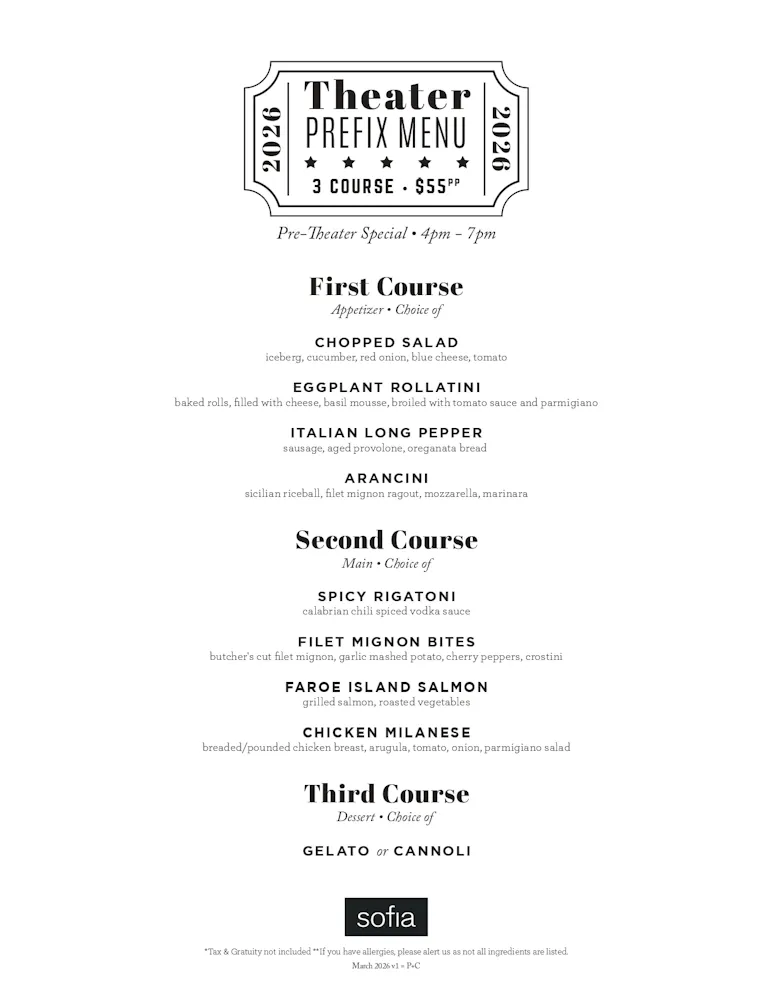
Cutting a menu down is harder than it sounds, because every remaining dish has to justify itself.
Nothing hides. With twelve mains instead of forty, a weak one is obvious. Short menus require every item to be good.
Turnover is faster. Fewer dishes means each ingredient moves more quickly, which means fresher product on the plate.
The kitchen can specialize. A team cooking a focused menu repeatedly gets better at it. Repetition is how a station develops precision.
Seasonality becomes possible. Changing four dishes is manageable. Changing forty isn't, which is why long menus tend to be frozen in place year-round.
Reading Sofia's Menu This Way
The dinner menu runs a defined set of sections — raw bar, caviar, seafood, whole market fish, house-made pasta, starters, soups and salads, the Butcher Shop, poultry, and sides.
Look at what's absent. No sushi. No burgers section beyond one. No unrelated cuisines. The pizza sits on the lunch menu rather than being stretched across both.
Within each section, the counts stay tight. Four chicken preparations. Three whole fish. Eight pastas. Seven vegetable sides — a column worth reading properly, as our sides piece argues.
That's a menu with a point of view: an Italian kitchen and a steak program, cooked over one wood-burning oven.
The description test
James Beard's forecast also noted descriptions getting simpler — no fluff, just real food with a story behind it.
Sofia's Butcher Shop header reads: wood fired, hand selected, USDA Prime, dry aged. Four claims, each verifiable, no adjectives doing emotional work. Our sourcing piece covers how naming origins functions the same way.
Compare that to a menu leaning on hand-crafted, artisanal, or premium. Those words carry no definition and cost nothing to print.
Where Length Is Legitimate
Fairness requires the caveat. Some long menus are honest.
Wine lists. Bottles don't spoil on the same timeline as food, so a deep wine list is a virtue rather than a warning.
Sections built from shared components. Eight pastas drawing on the same house-made dough and overlapping sauces are far less complex to run than eight unrelated entrées.
Raw bar programs. Oyster varieties are held on ice and rotate quickly.
The question isn't the count. It's whether the items share a kitchen, a pantry, and a purpose.
Questions
Is a shorter restaurant menu better?
Usually, yes. Fewer dishes means faster ingredient turnover, less frozen inventory, and a kitchen that repeats and refines a focused set of preparations. James Beard's 2026 forecast found operators deliberately cutting menus to fewer things done well.
What does a long menu tell you about a restaurant?
A very long menu often signals frozen or purchased ingredients, slow rotation, and a lack of focus, since holding inventory for dozens of dishes is difficult to do freshly. The clearest warning sign is a menu spanning unrelated cuisines.
Why are restaurants shortening their menus?
Shorter menus improve quality and reduce waste, and they streamline work for kitchen staff. Chefs surveyed for 2026 described smaller menus that change more often, built around what is fresh and seasonal.
Are long wine lists a bad sign?
No. Wine keeps in a way food does not, so a deep wine list reflects investment rather than inventory problems. The same logic applies to sections built from shared components, such as a pasta list drawing on one dough.
What makes a good menu description?
Simple, specific wording that names verifiable things — a grade, a farm, a region, a technique. Vague adjectives like premium or artisanal carry no definition. Chefs report descriptions getting simpler, with less fluff and more real detail.
About Sofia Englewood
Sofia is a fine dining Italian steakhouse in downtown Englewood, NJ, recognized by NJ Digest for timeless elegance paired with modern culinary excellence. The menu runs a focused set of sections built around one wood-burning oven — hand-selected USDA Prime dry-aged steaks, house-made pasta, wild-caught whole fish, and a raw bar with caviar service.
For reservations and private events, call (201) 541-8530. Full menus and hours and location are on the site.