

The Sober-Curious Table: Drinking Well Without Alcohol

Key Takeaways
- A serious mocktail program is a hospitality signal. When a fine dining bar builds real non-alcoholic drinks rather than offering soda and cranberry juice, it's treating every guest at the table the same way.
- Sofia's mocktail list runs through a bottled non-alcoholic Negroni from St. Agrestis, an espresso-martini-style A Better Buzz, and three fresh-fruit builds — plus non-alcoholic Peroni on the beer list.
- Not drinking is nobody's business but yours. The reasons are your own, and a well-run restaurant makes sure the question never comes up.
The Problem With Most Restaurant Non-Alcoholic Lists
You've had this experience. Everyone orders a cocktail, the server turns to you, and the options are soda, juice, or sparkling water.
You end up holding a glass of Coke through a three-hour dinner where everyone else has something made for them. The food is excellent. The evening is fine. But there's a small, persistent sense of sitting slightly outside it.
The fix is neither complicated nor expensive. It just requires a kitchen and bar to decide that non-drinkers are guests rather than an exception to accommodate.
Where It Gets Awkward, and How a Good Bar Solves It
The difficulty isn't the absence of alcohol. It's a handful of specific moments in a meal where drinking is the default and not drinking is visible.
The Opening Round
Everyone at the table orders a drink before dinner. That first round sets the tone, and it's the moment a bad non-alcoholic list is most obvious.
The Italian tradition helps here more than most. An aperitivo is defined by bitterness rather than alcohol — the point is to wake up the appetite, and bitterness does that work regardless of proof.
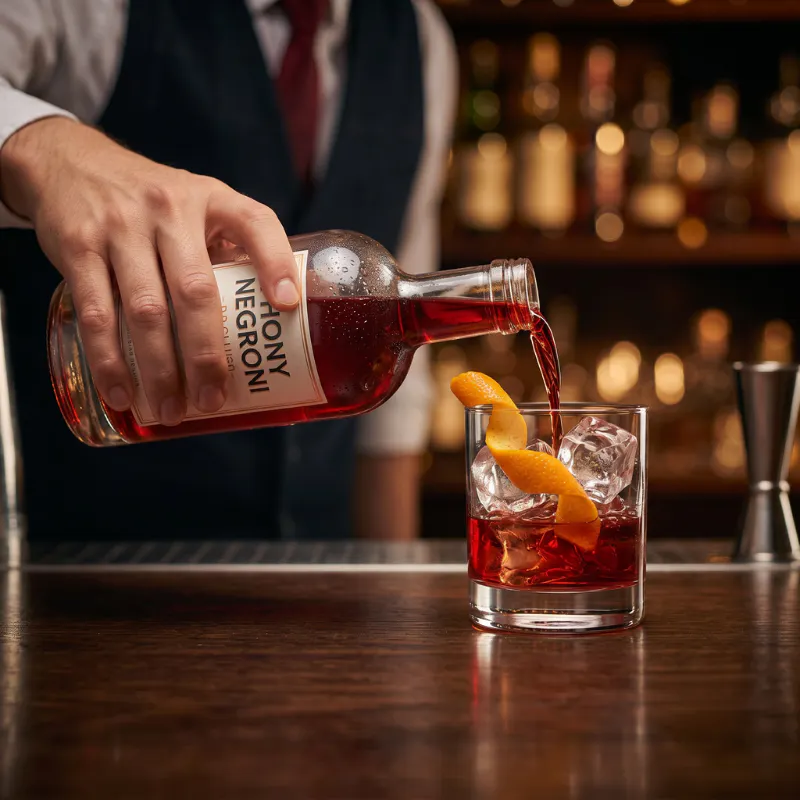
Which is exactly why the Phony Negroni functions properly. It's a bottled non-alcoholic Negroni from St. Agrestis, and it's genuinely bitter — the herbal, orange-peel, quinine character of the real thing. It performs the aperitivo's actual job, not a soft imitation of it.
The Order Itself
There's a version of this where the server visibly improvises, and a version where they don't.
A written mocktail list solves it. Sofia's sits on the dinner menu as its own section, which means ordering from it is the same act as ordering from any other part of the menu. No explaining, no asking what they can make, no watching a bartender think.
Small thing. Not really.
Wanting Something That Tastes Like a Drink
Sweet is easy. Complex is hard.
Most non-alcoholic drinks fail by leaning on fruit juice and sugar, which reads as a soft drink no matter how carefully it's garnished. Real cocktails have bitterness, acidity, aromatic depth, and a certain weight in the glass.
The builds that work are the ones chasing those qualities:
- Once U-Pom a Thyme — pomegranate, lemon, thyme-infused honey, light tonic. Herbal and tart rather than sweet, with tonic quinine adding a bitter edge.
- Island Passion — passionfruit, vanilla, lime, ginger beer. The ginger brings heat and bite, which is what keeps it from reading as juice.
- Feeling Peachy — white peach, lemon, sparkling lemon and lime. The lightest of the three, and the one that works best alongside food rather than before it.
Each is built the way a cocktail is built — a base, an acid, an aromatic, a topper. The technique is the same. Only the alcohol is missing.
The After-Dinner Moment
The end of a meal is the second place where not drinking becomes conspicuous. Everyone orders a digestivo or a coffee cocktail, and the non-drinker gets an espresso.
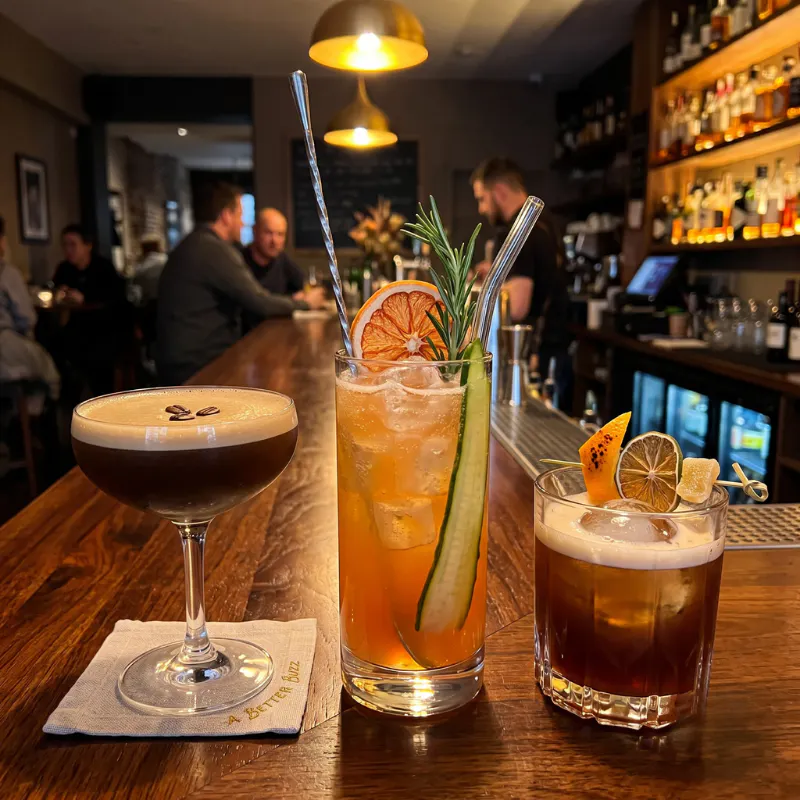
Espresso is a fine answer. A Better Buzz is a better one — fresh espresso shaken with French vanilla syrup and served up, in the same coupe an espresso martini would arrive in. Same ritual, same presentation, same moment.
For the fuller version of how an Italian meal is meant to close, our dolci and digestivo guide covers the tradition — and a good part of it works without alcohol.
The Business Dinner
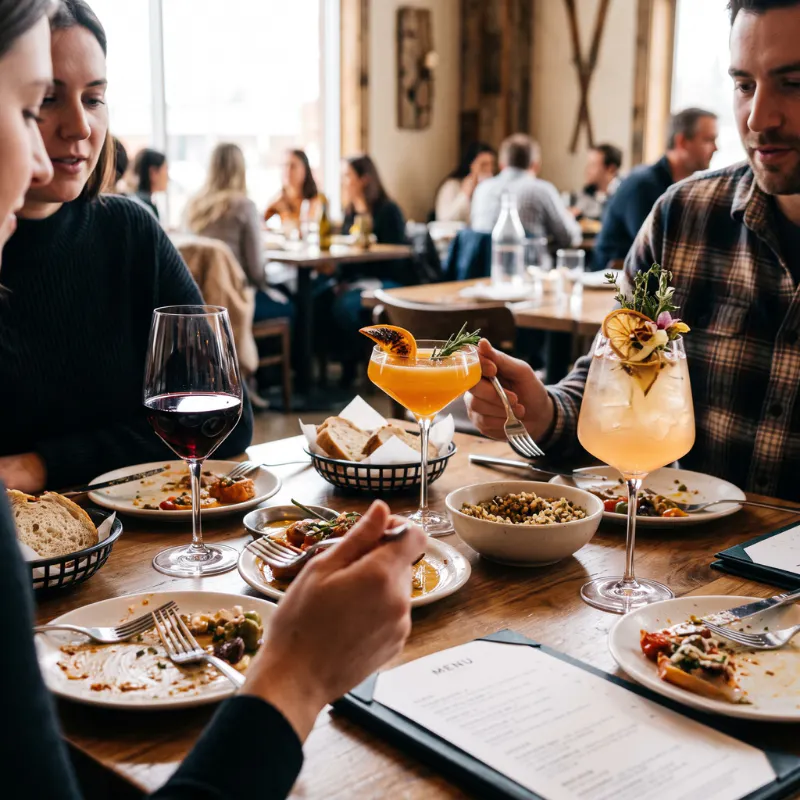
Worth its own mention. Declining a drink at a client dinner shouldn't require a reason, and a good host makes sure it doesn't.
If you're the one hosting, the move is simple: order first, order something non-alcoholic yourself if your guest isn't drinking, and never remark on it. Our business dinner guide covers the broader etiquette, but this specific courtesy matters more than most.
What a Real Non-Alcoholic Program Requires
Four things separate a genuine program from a token gesture.
Requirement | What it looks like |
A written list | Mocktails printed on the menu, not improvised on request |
Bitterness and acidity | Tonic, ginger, citrus, herbs — not just fruit juice and sugar |
Proper glassware | Served in the same glasses as cocktails, garnished the same way |
A non-alcoholic beer or two | For guests who want the format, not the effect |
That last one is easy to overlook. A non-alcoholic Peroni is a different proposition from a mocktail — it's for someone who wants a beer with their food and doesn't want a fruit drink. Having both covers two very different guests.
The Glassware Point Is Not Cosmetic
A drink served in a highball with a straw and a drink served up in a coupe are different experiences, even with identical liquid inside.
Part of what people miss when they skip alcohol is the ritual — the stem, the weight, the garnish, the fact that someone made something for you. Getting the glassware right restores most of that at essentially no cost.
Pairing Without Alcohol
Wine pairing has a non-alcoholic analogue, and it follows the same logic: match intensity, use acidity to cut richness.
- With a rich dry-aged steak — something with bitterness and structure. The Phony Negroni holds up better than anything sweet.
- With seafood or the raw bar — bright and acidic. Once U-Pom a Thyme, or sparkling water with lemon, which is a legitimate pairing rather than a fallback.
- With house-made pasta in a cream or tomato sauce — ginger-forward works well; Island Passion has enough bite to cut through.
- With dessert — A Better Buzz, in the same role coffee plays.
The principle transfers cleanly. Sweetness against rich food goes cloying fast; acidity and bitterness keep working.
At Brunch
The daytime version has its own logic. Brunch is the meal most defined by its drinks — mimosas, Bloody Marys, spritzes — which makes it the meal where a non-drinker is most visible.
The mocktail list carries over, and A Better Buzz makes particular sense in the morning. Sofia's weekend brunch also serves a kid's menu, which is worth noting for a different reason: a table with children and non-drinking adults is an extremely common configuration, and both are handled.
The Broader Point
Restaurants have spent the last several years catching up here, prompted by a real shift in how people drink. Some guests are in recovery. Some are pregnant. Some take medication that rules it out. Some are driving. Some observe a faith that prohibits it. Some simply have work in the morning, or don't feel like it tonight.
None of those reasons is a restaurant's business, and a well-run one never inquires. What it does instead is make sure the answer to "what can I have?" is a real list rather than an apology.
That attentiveness — considering guests you don't strictly have to — is the same quality that separates fine dining from merely expensive dining, which our casual vs. fine dining guide works through in more detail.
Quick Questions
What is a mocktail?
A mocktail is a non-alcoholic drink built with the same technique as a cocktail — a base, an acid, an aromatic element, and often a topper — and served in comparable glassware. Well-made mocktails aim for bitterness, acidity, and complexity rather than sweetness alone.
Does Sofia have mocktails?
Yes. Sofia in Englewood, NJ lists a mocktail section on its dinner menu, including a Phony Negroni bottled by St. Agrestis, A Better Buzz made with fresh espresso, Feeling Peachy, Island Passion, and Once U-Pom a Thyme. Non-alcoholic Peroni is also available.
What is a Phony Negroni?
A Phony Negroni is a non-alcoholic version of the classic Negroni, bottled by St. Agrestis. It reproduces the bitter, herbal, orange-peel character of the original without alcohol, which makes it work as a genuine aperitivo before a meal.
What can I drink at a restaurant if I'm not drinking alcohol?
Look for a written mocktail list, non-alcoholic beer, or a non-alcoholic aperitivo. Drinks built on tonic, ginger, citrus, and herbs tend to work better with food than fruit juice, since bitterness and acidity cut richness the way wine does.
What pairs with steak if you're not drinking wine?
Choose something with bitterness and structure rather than sweetness. A non-alcoholic Negroni or a tonic-based drink with herbal notes stands up to a rich dry-aged steak far better than a fruit-forward mocktail.
Where can I find good non-alcoholic drinks in Bergen County?
Sofia, a fine dining Italian steakhouse in Englewood, NJ, maintains a dedicated mocktail section on its dinner menu alongside its craft cocktail program, with five non-alcoholic drinks and non-alcoholic beer available.
About Sofia Englewood
Sofia is a fine dining Italian steakhouse in downtown Englewood, NJ, recognized by NJ Digest for "timeless elegance coupled with modern culinary excellence." The bar's mocktail list includes a Phony Negroni bottled by St. Agrestis, A Better Buzz made with fresh espresso, and fresh-fruit builds served alongside a full craft cocktail program. The kitchen serves wood-fired USDA Prime dry-aged steaks, house-made pasta, daily-flown seafood, and a raw bar with caviar service.
For reservations and private events, call (201) 541-8530 or book online. Full menus and hours and location are on the site.