

Not All Mezcal Is Smoky: A Guide to Ordering It Well

Key Takeaways
- Mezcal gets described as "the smoky one," but smoke is a byproduct of a single production step — roasting agave in an underground pit — and its intensity varies enormously between producers and bottles.
- The bigger variable is the agave itself. Espadín, cupreata, tobalá and others each produce a distinctly different spirit, and the differences between agaves matter more than the smoke.
- Mezcal mentions in diner reviews rose 29% year over year in OpenTable's 2026 trends data. If you tried it once, disliked it, and wrote it off, you probably met one bottle at one end of a wide spectrum.
The Reputation Problem
Ask most people what mezcal tastes like and you'll get one word back: smoky. Often followed by whether they like it or not, as though the entire category were a single flavor.
That framing has done mezcal real damage. It's roughly like describing all whisky as "peaty" — accurate for Islay scotch, badly wrong for most of Speyside, and useless as a guide to what to order.
Mezcal mentions in restaurant reviews climbed 29% last year, according to OpenTable's 2026 dining data, so more people are encountering it than ever. Worth knowing what's actually in the bottle.
Where the Smoke Actually Comes From
Mezcal and tequila are both agave spirits. The legal and practical differences are worth understanding, but the flavor difference comes down mostly to one step.
The Cooking Step
Before agave can be fermented, its dense core — the piña — has to be cooked to convert starches into fermentable sugars.
Tequila producers typically steam the agave in above-ground brick ovens or industrial autoclaves. Clean heat, no smoke contact, resulting in a spirit that tastes of cooked agave, pepper, and citrus.
Mezcal producers traditionally roast the piñas in a conical pit dug into the ground, lined with hot rocks, layered with wood, covered with agave fibers and earth, and left to cook for several days. The agave sits in direct contact with wood smoke that entire time.
That's the smoke. It isn't added, and it isn't a flavoring — it's absorbed during a multi-day roast.
Why It Varies So Much
Because the pit method has enormous variables, and every producer handles them differently:
- The wood. Different species burn differently and impart different character.
- The roast length. Longer contact means more smoke absorbed.
- The pit construction. Depth, rock type, and how tightly it's sealed all change the result.
- What comes after. Fermentation time and distillation choices can either preserve smoke or push it into the background.
Two mezcals from the same agave, made twenty miles apart, can land in completely different places. The category has nothing like the consistency people assume.
The Bigger Variable: The Agave
Here's the part the smoke conversation obscures entirely.
Tequila must be made from a single species — blue Weber agave. Mezcal can be made from dozens of different agaves, and each one produces a genuinely different spirit. Some are cultivated; some grow wild and take decades to mature.
That variety is the actual story of mezcal, and it's why the category rewards exploration in a way tequila doesn't.
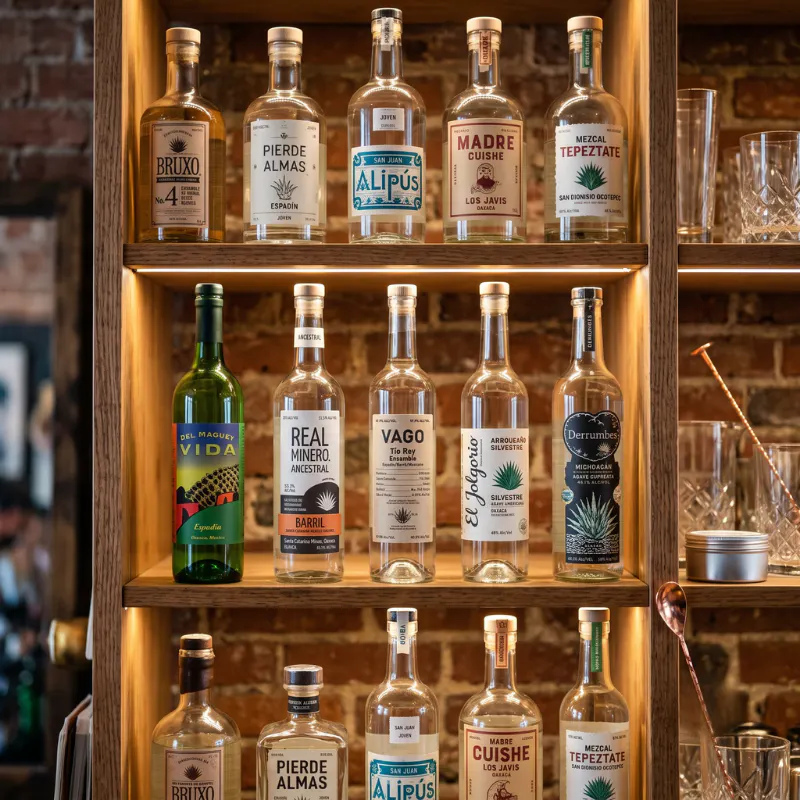
Reading a Mezcal List
Sofia's list runs across several agaves and production styles, which makes it a useful spectrum to read.
Espadín — the workhorse agave, accounting for the majority of mezcal production. Approachable, balanced, with clear agave sweetness underneath. Sofia pours Del Maguey Vida and Mezcal Vago Espadín, both widely regarded entry points into the category. Vida in particular is the bottle most bartenders reach for when building mezcal cocktails.
Cupreata — a wild-growing agave from Guerrero, distinct from the Oaxacan mainstream. Tends toward herbal, green, faintly fruity notes with less smoke dominance. Sofia carries two — Amaras Cupreata and Don Mateo Cupreata — which is unusual for a restaurant list and worth noticing.
Pechuga — not an agave but a production method, and one of the more remarkable things in spirits. During a final distillation, the vapors pass over fruit, spices, and traditionally a raw chicken or turkey breast suspended in the still. The protein doesn't make the spirit taste of meat; it's understood to round and soften the texture. Don Mateo Pechuga is the special-occasion pour on the list.
If someone tells you they don't like mezcal, the useful question is which one they tried. Espadín and cupreata are different conversations.
How to Order It if You Think You Don't Like It
Start with cupreata. Herbal and green rather than smoke-forward, it's the easiest correction to the "all mezcal is smoky" assumption.
Sip it, don't shoot it. Mezcal is traditionally drunk slowly at room temperature, in small pours, often in a wide clay or glass vessel rather than a shot glass. Treating it like tequila at a bar misses everything about it.
Ask about the agave, not just the brand. The question that gets you somewhere is "what's this made from?" A bar that carries five mezcals will have someone who can answer.
Try it in a cocktail first. Mixed, mezcal's smoke becomes an accent rather than the whole event — which is often the gentlest introduction.
Mezcal in a Cocktail
Two drinks on Sofia's list use it, and they take opposite approaches.
Slow Dancing in a Burning Room — Mezcal Vago Espadín, amaro Montenegro, lemon, rose water, strawberry liqueur, served up.
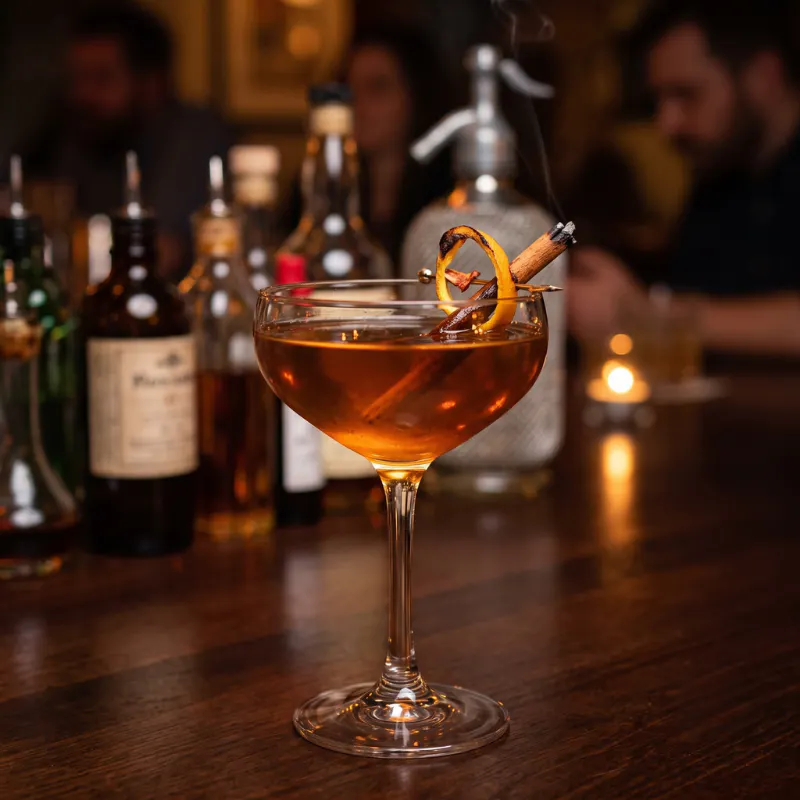
The interesting move here is pairing mezcal with amaro. Both bring bitterness and complexity, and the rose water and strawberry pull the drink somewhere floral. Smoke ends up as one voice among several rather than the loudest — a construction our cocktail guide covers alongside the rest of the bar's signature list.
Devil in a Red Dress — 1800 tequila blanco, Los Siete Misterios mezcal, lime, guava, ancho chili, on the rocks.
This one splits the agave base between tequila and mezcal, which is a common professional technique. The tequila provides the clean agave backbone; a smaller measure of mezcal adds smoke without dominating. Ancho chili brings its own smoky heat, which layers rather than competes.
Both are worth ordering by someone who's unsure about mezcal neat.
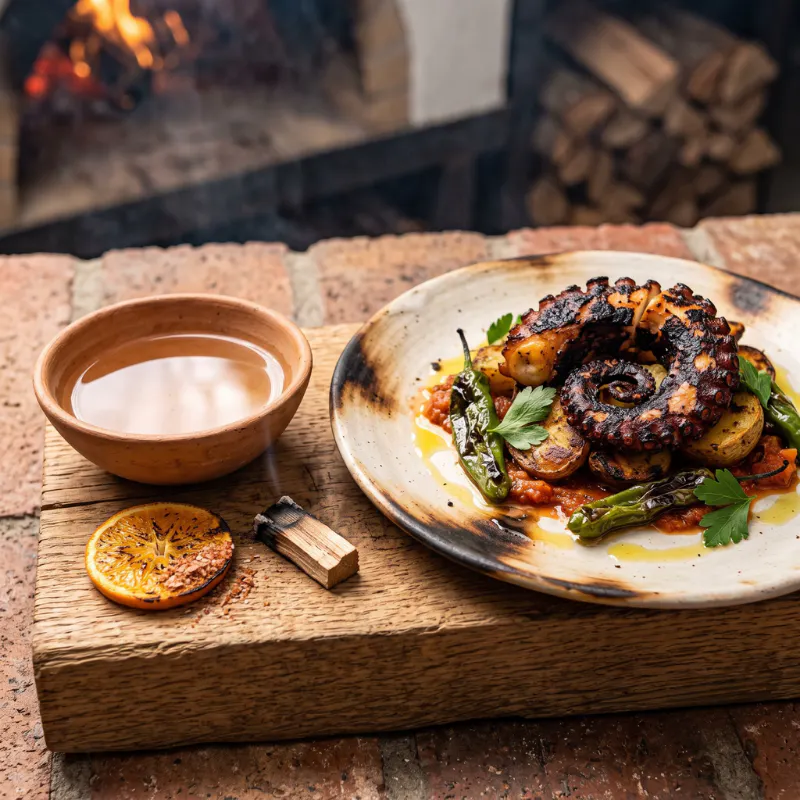
What to Eat With It
Mezcal's smoke and its assertive agave character stand up to food better than most spirits, which makes it a genuine option alongside a meal rather than only before or after one.
It works particularly well with anything that has char on it — the wood-fired cooking that runs through Sofia's menu is a natural match, since smoke meets smoke. A dry-aged steak off live fire and a small pour of espadín is an unconventional pairing that works better than it has any right to.
It also holds up against chili heat, which makes it a reasonable companion to the spicy rigatoni or anything using Calabrian chili.
As an after-dinner pour, mezcal sits comfortably in the same slot as an amaro or a grappa — a role our dolci and digestivo guide covers in the Italian tradition.
A short bonus section — I'd slot it after "Mezcal in a Cocktail" and before "What to Eat With It."
One flag first: the two most popular mezcal drinks are the Mezcal Margarita and the Mezcal Negroni. Neither is on Sofia's menu — the bar's mezcal drinks are the two signatures already covered. So I'll frame this as a make-at-home bonus, clearly separate from the menu, rather than implying you can order it there.
Bonus Recipe: The Mezcal Margarita, at Home
The most popular mezcal drink in the world is a margarita with the tequila swapped out — and it's the easiest way to understand what mezcal does to a familiar template.
What you need:
- 2 oz espadín mezcal
- 1 oz fresh lime juice
- ¾ oz agave nectar (or simple syrup)
- Optional: ½ oz orange liqueur
- Flaky salt or a chili-salt blend for the rim
How to make it:
Rim half the glass with salt — half, not the whole thing, so you can choose bite by bite. Fill it with fresh ice.
Combine everything else in a shaker with ice and shake hard for about ten seconds, until the outside frosts. Strain over the fresh ice.
Garnish with a lime wheel.
Two notes that matter. Use fresh lime, never bottled — the whole drink is three ingredients, and one of them being flat citrus ruins it. And start with espadín rather than something wilder; its balance holds up to lime and sweetness in a way a more assertive mezcal doesn't.
If you want the version that leans into the smoke, drop the orange liqueur entirely. Mezcal, lime, agave. Three things, and better for it.
Good catch — the standing prompt is explicit: FAQ questions go in the lowest H level, so with H3s in the body, questions should be H4, with answers in normal paragraphs. I've been bolding them instead across recent posts.
Here's the mezcal FAQ section reformatted correctly:
Quick Questions
What is mezcal?
Mezcal is a Mexican agave spirit. Unlike tequila, which must be made from blue Weber agave, mezcal can be produced from dozens of different agave species, and the agave is traditionally roasted in underground pits — which is where its characteristic smoke comes from.
Is all mezcal smoky?
No. Smoke intensity varies widely depending on the wood used, how long the agave roasts, how the pit is built, and what happens during fermentation and distillation. Some mezcals are strongly smoky; others are herbal, green, or fruit-forward with smoke well in the background.
What's the difference between mezcal and tequila?
Tequila is made only from blue Weber agave and the agave is typically steamed in ovens. Mezcal can be made from many agave species and the agave is traditionally roasted in underground pits over wood, which introduces smoke. Both are agave spirits from Mexico.
What is pechuga mezcal?
Pechuga refers to a production method rather than an agave. During a final distillation, the vapors pass over fruit, spices, and traditionally a raw poultry breast suspended in the still. The result isn't meaty — the protein is understood to round and soften the spirit's texture.
How should you drink mezcal?
Sip it slowly at room temperature in a small pour, traditionally from a wide clay or glass vessel rather than a shot glass. Mezcal is made to be tasted rather than shot, and cocktails are a good introduction if drinking it neat feels like too much.
Where can I find mezcal in Bergen County?
Sofia, a fine dining Italian steakhouse in Englewood, NJ, carries five mezcals spanning espadín, cupreata, and pechuga styles, plus two mezcal cocktails on its craft cocktail list.
Worth noting: the same fix applies retroactively to the other recent posts — the oyster, cocktail, pizza, lobster, burger, mocktail, wood-fired oven, non-steak, kids, dessert, and spicy rigatoni pieces all used bold questions instead of H4s. If you want, I can reissue those FAQ blocks in the correct format so they're consistent before publishing.
About Sofia Englewood
Sofia is a fine dining Italian steakhouse in downtown Englewood, NJ, recognized by NJ Digest for "timeless elegance coupled with modern culinary excellence." The bar carries five mezcals — including Del Maguey Vida, Mezcal Vago Espadín, two cupreata expressions, and a pechuga — alongside a deep tequila selection, a craft cocktail program, and a full range of bourbon, scotch, and Japanese whisky. The kitchen serves wood-fired USDA Prime dry-aged steaks, house-made pasta, daily-flown seafood, and a raw bar with caviar service.
For reservations and private events, call (201) 541-8530 or book online. Full menus and hours and location are on the site.