

Provenance on a Menu: What Naming the Source Actually Means

Key Takeaways
- Menu provenance — naming the farm, the water, or the region an ingredient came from — has become one of the clearest signals of how a kitchen operates.
- Industry forecasts for 2026 describe sourcing detail as a form of personalization, with menus reading like conversations and provenance offering authenticity rather than algorithms.
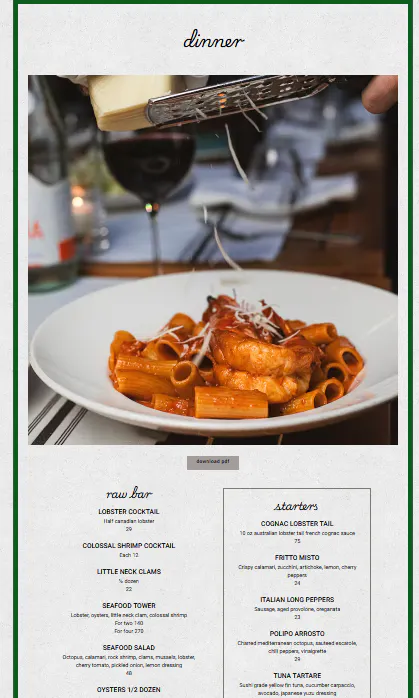
- Sofia names sources throughout: Giannone farm chicken, Faroe Island salmon, wild-caught Florida snapper, Greek branzino, Canadian and Australian lobster, imported Vesuvius tomatoes, and four separate oyster beds.
The New Personalization
Restaurants spent a decade trying to personalize through technology — apps, loyalty tiers, algorithmic recommendations.
The 2026 forecasts point somewhere quieter. KitchenHub's outlook describes the best menus as feeling like conversations, reflecting local farms and cultural identity, and frames the shift as personalization through provenance — authenticity rather than algorithms.
James Beard's 2026 forecast found the same instinct in how menus are written, quoting one chef on simpler descriptions with no fluff, just real food with a story behind it.
Both describe the same move. Say less, but say where it came from.
What a Named Source Costs
Printing a place name on a menu looks free. It isn't.
It removes flexibility
A menu that says salmon can serve whatever salmon arrived. A menu that says Faroe Island salmon has named a specific North Atlantic fishery — cold, deep water producing firm flesh and high fat content — and can't substitute without reprinting.
Same with Giannone farm, the Quebec poultry producer behind Sofia's four chicken preparations. Naming them is a supply commitment rather than a description.
It accepts the weather
Sofia's whole market fish are listed as wild caught — Red Snapper from Florida, Black Sea Bass from the Atlantic, Branzino from Greece. Wild supply moves with conditions rather than with purchase orders.
A kitchen naming wild sources is accepting that some nights the answer is no.
It invites correction
Naming Canadian lobster across most preparations while the Cognac Lobster Tail is Australian invites a knowledgeable diner to notice. The distinction is real — cold-water Canadian lobster is sweeter and more tender, warm-water Australian is firmer and meatier, better suited to a rich sauce. Our lobster guide covers all eight preparations.
Precision in public only works when the sourcing holds.
The Places on the Menu
Mount Vesuvius, Italy. The Spaghetti al Pomodoro specifies imported Vesuvius tomatoes. Volcanic soil on the slopes produces tomatoes known for sweetness and low acidity.
The Faroe Islands. Cold, fast-moving North Atlantic water, and the reason the salmon carries the origin rather than just the species.
Quebec, Canada. Giannone farm, behind the chicken parmigiana, the milanese, the paillard, and the wood-fired Pollo al Limone.
Four oyster beds. Totten Inlet and Kumamoto from Washington, Blue Point from Connecticut, Cheebooktook from Canada — each with its own tasting note on the menu. Oysters taste like the water they grew in, the concept our oyster guide covers as merroir.
Calabria, Italy. The chili behind the spicy rigatoni, a specific regional variety with fruity, rounded heat.
Nigeria. Jumbo prawns, named by origin on the seafood section.
The Beef Is a Different Kind of Claim
The Butcher Shop doesn't name a ranch. It names a standard: hand-selected USDA Prime, dry-aged, wood-fired.
USDA Prime is a federal grade covering a small share of American beef, awarded on marbling and maturity. Dry-aging is a weeks-long process that concentrates flavor and tenderizes — our dry-aging guide covers the mechanics.
Both are verifiable rather than decorative. Premium beef means nothing. USDA Prime, dry-aged, means something a kitchen either does or doesn't do.
Reading Any Menu This Way
Count the proper nouns. Farms, waters, regions, producers. Their presence is a signal, and so is a menu that has none.
Separate standards from adjectives. USDA Prime, wild caught, and organic have definitions. Premium, artisanal, and hand-crafted don't.
Watch what moves. Market fish and seasonal items indicate a kitchen following supply rather than fixing a permanent list.
Ask a server. A restaurant proud of its sourcing will have staff who can answer. A blank look answers the question differently.
Questions
What does provenance mean on a menu?
Menu provenance refers to naming where an ingredient came from — a specific farm, fishery, region, or producer — rather than describing it generically. It functions as a checkable claim about sourcing.
Why do restaurants name the farm or region?
Naming a source commits a kitchen to a specific supplier and standard, and signals confidence in the sourcing. Industry forecasts for 2026 describe provenance as a form of personalization, offering diners authenticity rather than generic description.
What is Faroe Island salmon?
Faroe Island salmon is raised in the cold, deep waters of the North Atlantic between Iceland and Norway. The conditions produce fish with firm texture and high fat content, which is why menus often name the origin.
Does wild caught mean better quality?
Not automatically, but it means the fish came from open water rather than a farm, and that supply varies with season and conditions. Sofia's whole market fish — Florida red snapper, Atlantic black sea bass, and Greek branzino — are all wild caught.
What are Vesuvius tomatoes?
Vesuvius tomatoes grow in volcanic soil on the slopes around Mount Vesuvius in Campania, Italy. The mineral-rich soil produces tomatoes known for sweetness and low acidity, prized for sauces.
About Sofia Englewood
Sofia is a fine dining Italian steakhouse in downtown Englewood, NJ, recognized by NJ Digest for timeless elegance paired with modern culinary excellence. The menu names its sources throughout — Giannone farm chicken, Faroe Island salmon, wild-caught Florida red snapper, Atlantic black sea bass and Greek branzino, Canadian lobster, imported Vesuvius tomatoes, and four named oyster beds — alongside hand-selected USDA Prime dry-aged steaks cooked over wood.
For reservations and private events, call (201) 541-8530. Full menus and hours and location are on the site.