

Lobster, Eight Ways: How One Ingredient Runs Through a Fine Dining Menu

Key Takeaways
- Lobster appears in more places on Sofia's menu than any other single ingredient — cold on the raw bar, charred as a starter, split over pasta, and paired with filet mignon. Each preparation produces a genuinely different dish.
- The preparation matters more than the ingredient. Steamed lobster is clean and sweet; charred lobster picks up smoke and caramelization; lobster in a spicy sauce becomes something else entirely.
- Choose by how much work you want to do. Some versions arrive shelled and ready; others hand you a whole animal and a cracker. Neither is better — they're different evenings.
One Ingredient, Read Across a Menu
Most menus use lobster once, as the expensive thing. A kitchen that returns to it repeatedly is doing something else — treating one ingredient as a material with different properties depending on how you handle it.
Cold lobster tastes sweet and clean. The same lobster charred over fire tastes of smoke and caramelized sugars. Split into a fra diavolo sauce, the meat picks up chili and tomato and stops being the centerpiece. Beside a filet mignon, it plays a supporting role entirely.
What follows is a walk through the menu by preparation — what each method does to the meat, and which one suits which kind of meal.
Cold: The Raw Bar Version
Lobster Cocktail — half Canadian lobster, chilled.
Cold lobster is the purest expression of the ingredient. Nothing between you and the meat: no char, no sauce, no butter. Just the sweet, firm, faintly saline flesh.
Cold service is also the least forgiving. Warm preparations can hide a mediocre lobster behind butter and fire; a cold one can't. Ordering lobster cocktail is a way of testing what a kitchen is actually buying.
It belongs at the opening of a meal, alongside the oysters and raw bar — cold, briny, appetite-waking. Lobster also appears in the seafood tower and the seafood salad, both built on the same cold-service logic.
Whole: The Full Commitment
Canadian Lobster — 1.5 lbs and up, prepared four ways.
The whole lobster is the version that asks the most of you and gives the most back. Four preparations, four different dishes:
- Steamed — the classic. Gentle, even cooking; the sweetest, cleanest result. Melted butter and nothing else.
- Broiled — direct top heat browns and firms the surface, concentrating flavor and adding a light caramelization the steamed version doesn't have.
- Angry — fra diavolo territory, with chili heat. The lobster meets tomato and spice.
- Cognac — a French-leaning move, the brandy sauce adding richness and a faint sweetness that plays against the meat.
What "Whole" Actually Means for the Table
A whole lobster is a two-handed dish. Shell, cracker, bib, time. That's a feature if the evening is unhurried and a problem if it isn't — which is worth knowing before you order one at a business dinner.
For a relaxed dinner, it's one of the more satisfying plates on any menu.
Charred: What Fire Does
Lobster a la Plancha — charred half Canadian lobster, melted butter, fresh herbs.
A la plancha means cooked on a flat, very hot surface. Applied to lobster, high direct heat caramelizes the surface sugars in the meat and adds a light char the shell protects the interior from.
The result splits the difference: the sweetness of the lobster with a smoky, browned edge. Butter and herbs, nothing more complicated.
It's a starter portion, which makes it the easiest way to have lobster without committing your whole entrée to it.
Rich: The Cognac Version
Cognac Lobster Tail — 10 oz Australian lobster tail, French cognac sauce.
Two things separate this from the rest of the menu. It's Australian rather than Canadian — a warm-water tail, firmer and meatier than the cold-water Canadian lobster. And it's the richest preparation on offer.
Cognac sauce is a classic French treatment: brandy, cream, reduction. Sweet, deep, and heavy in the right way. It's also a tail only, so all meat, no shell work.
Order it when you want lobster as luxury rather than lobster as an eating project.
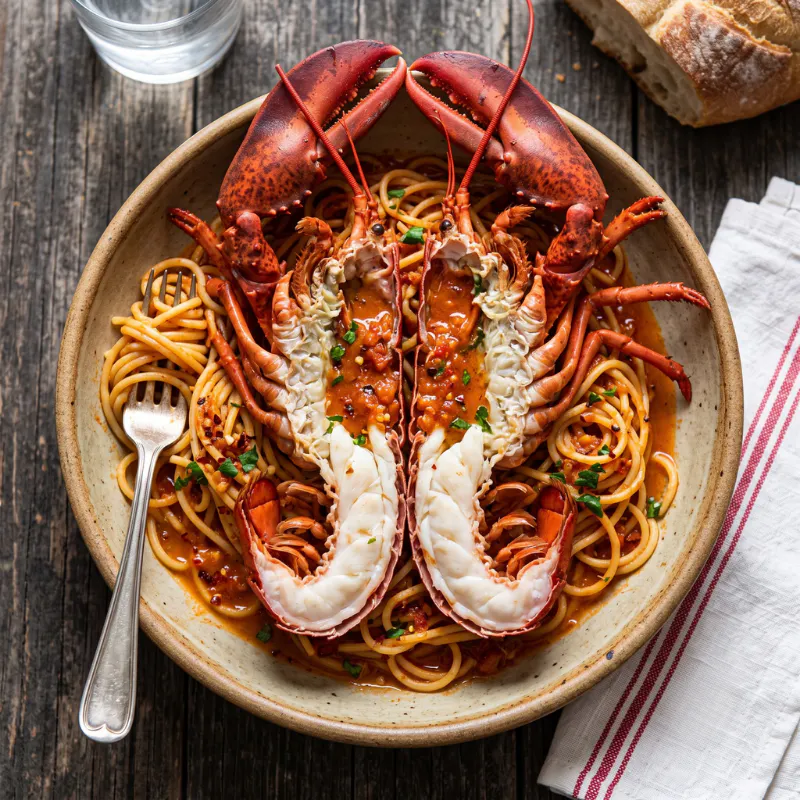
In Pasta: Lobster as a Component
Two dishes put lobster into the house-made pasta section, and they work in opposite directions.
Spaghetti Lobster — 1.5 lb split Canadian lobster, fra diavolo sauce.
The lobster stays whole and split, laid over the pasta. Fra diavolo — tomato and chili — brings heat that plays against the sweetness of the meat. Long strands suit it: spaghetti twirls and carries a loose, oil-and-tomato sauce without overwhelming the seafood.
Still a two-handed dish. The lobster is intact.
Lobster Spicy Rigatoni — vodka sauce, Calabrian chili, lobster chunks, parmigiano reggiano.
The opposite approach. Here the lobster is chunked into the sauce rather than presented whole. Ridged tubes trap the creamy vodka sauce and the pieces of meat, so every bite has some.
No shell work at all, which makes it the easier of the two — and the better call when you want lobster without the labor.
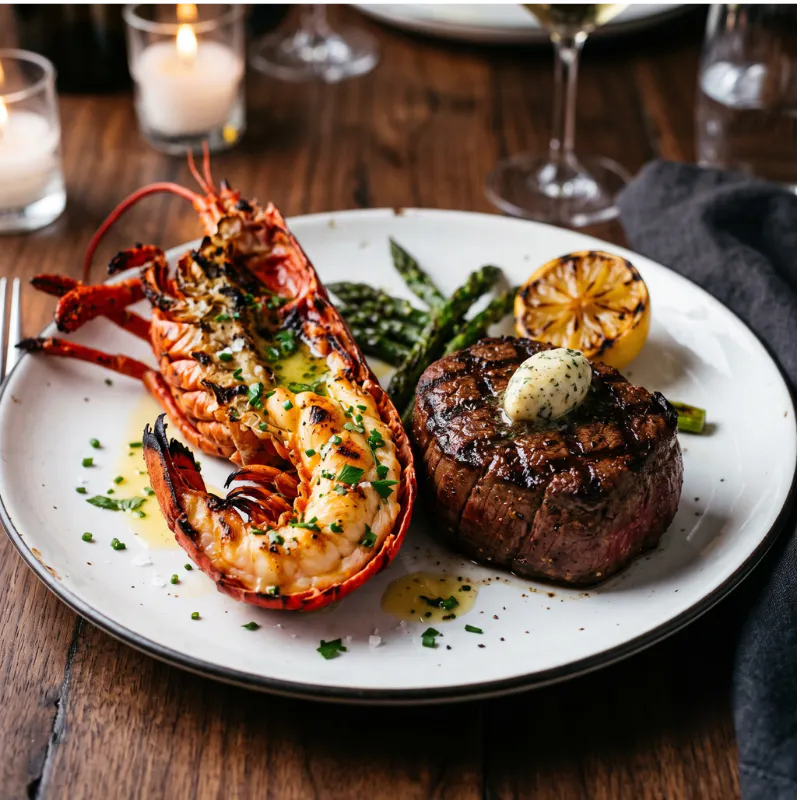
With Beef: Surf & Turf
Surf & Turf — charred half 1.5 lb Canadian lobster and an 8 oz filet mignon.
The classic pairing, and a genuine test of a kitchen, since the two proteins want completely different treatment and have to arrive together at the right temperature.
The logic is contrast. Filet mignon is lean, tender, and mild; the dry-aging and grading that define it produce a beefy but restrained flavor. Charred lobster is sweet, briny, and smoky. Each makes the other taste more like itself.
It's also the order for a table that can't decide — and a natural for an anniversary or celebration where you want the plate to feel like an occasion.
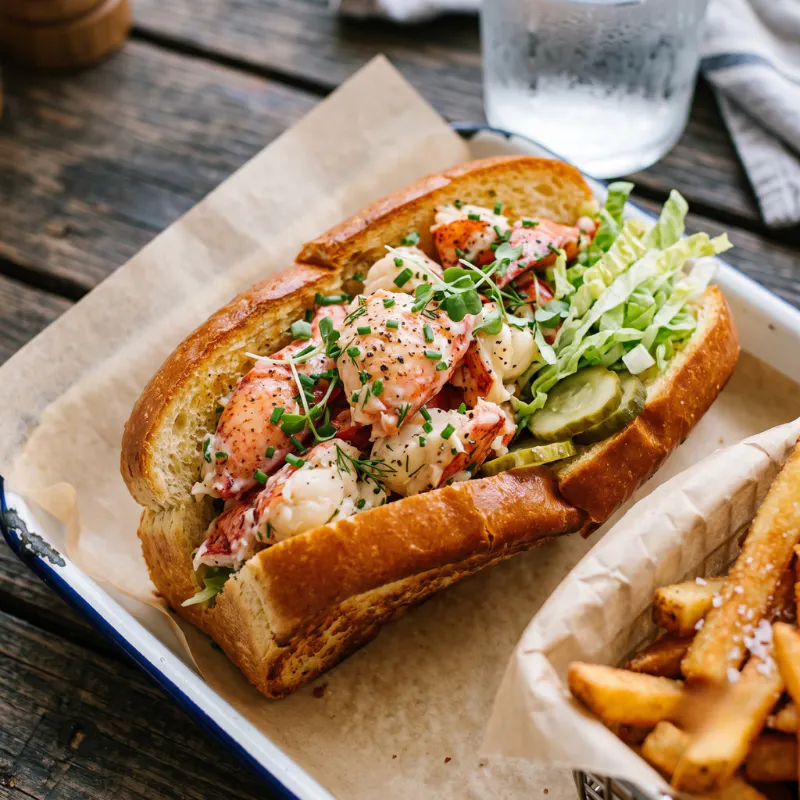
Casual: The Lobster Roll
Lobster Roll — brioche, Canadian lobster, lolla rossa, pickles, remoulade.
On the lunch and brunch menus, and the most relaxed thing lobster does here. Cold-dressed lobster meat, remoulade rather than plain mayonnaise, on brioche.
The lobster roll is a reminder that the ingredient doesn't require ceremony. At lunch — or on a business lunch where a whole lobster would be absurd — it delivers the same meat in a form you can eat in twenty minutes.
Which One Should You Order?
If you want… | Order | Shell work? |
The purest taste of the ingredient | Lobster Cocktail | Minimal |
A full, unhurried project | Whole Canadian Lobster | Yes, all of it |
Smoke and char, starter-sized | Lobster a la Plancha | A little |
Richness, all meat | Cognac Lobster Tail | None |
Lobster with heat, over pasta | Spaghetti Lobster | Yes |
Lobster with no labor, over pasta | Lobster Spicy Rigatoni | None |
Contrast on one plate | Surf & Turf | Some |
Lobster at lunch, quickly | Lobster Roll | None |
A Note on Cold-Water vs. Warm-Water
Most of the lobster here is Canadian — cold-water, which produces sweeter, more tender meat and is generally the more prized. The Cognac Lobster Tail is Australian, a warm-water species with firmer, meatier flesh that stands up better to a heavy sauce.
Neither is superior. They suit different preparations, which is presumably why both are on the menu.
What to Drink With It
Lobster wants bright, dry whites and skips heavy reds entirely — tannin turns metallic against shellfish.
- Cold or steamed lobster — Champagne, Chablis, or a crisp Italian white like Vermentino or Gavi
- Charred or broiled — something with a little more body, a fuller Chardonnay or a Greco di Tufo
- Fra diavolo or spicy rigatoni — a white with acidity to cut the chili, or a very light red
- Surf & Turf — the compromise pairing, where a lighter red like Pinot Noir bridges both proteins
Our Italian wine pairing guide covers the fuller logic, including where the big bottles do belong.
Quick Questions
What's the difference between Canadian and Australian lobster?
Canadian lobster is a cold-water species with sweeter, more tender meat, generally considered the more prized. Australian lobster is warm-water, with firmer and meatier flesh that holds up well to rich sauces. Sofia in Englewood serves Canadian lobster across most preparations and an Australian tail in its cognac preparation.
What does lobster a la plancha mean?
A la plancha means cooked on a flat, very hot surface. For lobster, the high direct heat caramelizes the meat's natural sugars and adds a light char, producing a smokier result than steaming while keeping the sweetness intact.
What is lobster fra diavolo?
Fra diavolo is an Italian-American preparation built on tomato and chili heat. Lobster fra diavolo pairs the sweetness of the shellfish against spice and acidity, and is typically served over long pasta such as spaghetti.
Which lobster dish is easiest to eat?
The dishes with no shell work are the Cognac Lobster Tail, the Lobster Spicy Rigatoni, and the Lobster Roll. Whole lobster and Spaghetti Lobster both arrive with the shell intact and require cracking.
What wine goes with lobster?
Bright, dry whites pair best — Champagne, Chablis, or crisp Italian whites like Vermentino and Gavi. Avoid tannic red wines, which turn metallic against shellfish. For Surf & Turf, a lighter red such as Pinot Noir can bridge both the lobster and the beef.
Where can I get lobster in Bergen County?
Sofia, a fine dining Italian steakhouse in Englewood, NJ, serves lobster across its menu — on the raw bar, as a charred starter, whole in four preparations, over house-made pasta, in Surf & Turf, and as a lobster roll at lunch and brunch.
About Sofia Englewood
Sofia is a fine dining Italian steakhouse in downtown Englewood, NJ, recognized by NJ Digest for "timeless elegance coupled with modern culinary excellence." Lobster runs throughout the menu — on the raw bar and in the seafood tower, charred a la plancha, whole in steamed, broiled, angry, or cognac preparations, split over spaghetti fra diavolo, chunked into spicy rigatoni, paired with filet mignon in Surf & Turf, and served as a lobster roll at lunch and brunch. The kitchen also serves wood-fired USDA Prime dry-aged steaks, caviar service, and a curated Italian-and-American wine list.
For reservations and private events, call (201) 541-8530 or book online. Full menus and hours and location are on the site.