

The Perfect Pair: Matching Bold Italian Wines with Dry-Aged Steaks

Key Takeaways
- The best Italian wine and dry-aged steak pairings share three traits: tannin strong enough to cut through marbled fat, acidity bright enough to refresh the palate, and enough body to hold its own against a wood-fired Prime cut. Super Tuscans, Barolo, Brunello, and Amarone all hit the mark.
- Each Italian wine category has a cut it works with best. Super Tuscans like Sassicaia and Ornellaia pair beautifully with ribeye. Barolo handles bone-in cuts. Brunello shines with filet mignon. Amarone belongs with the heaviest, fattiest steaks on the menu.
- Sofia's Butcher Shop runs USDA Prime, dry-aged cuts — Filet Mignon, Porterhouse, bone-in Ribeye lollipop, NY Strip, Surf & Turf — and the wine list carries serious anchors for every one of them.
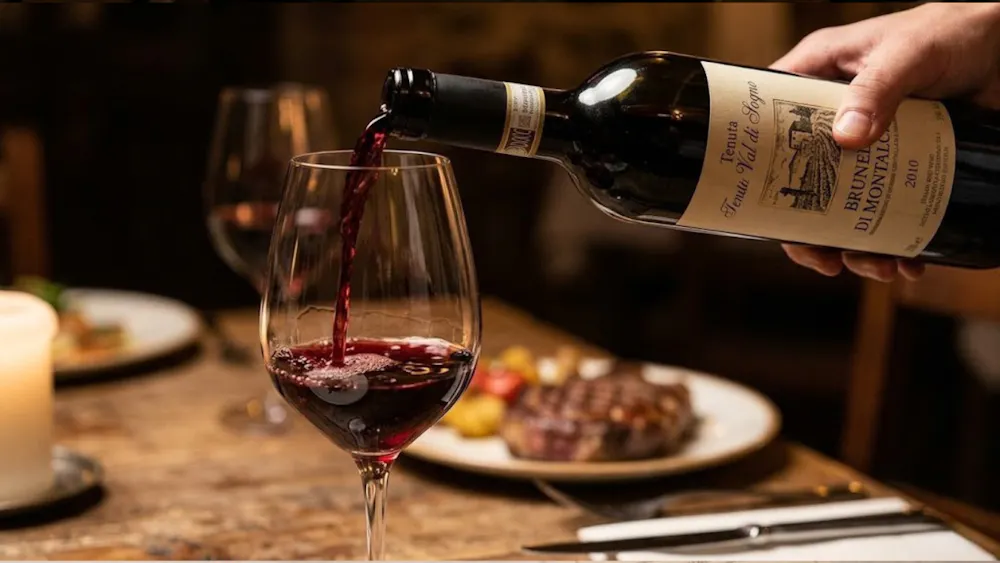
A great steak deserves a wine that earns its place at the table. Most diners default to the same go-to — a Napa Cabernet, ordered without much thought, the same bottle they ordered last time.
There's nothing wrong with Napa Cab. But ordering it every time means missing one of the more rewarding pairings in the fine dining world: a serious Italian red with a properly dry-aged, USDA Prime steak.
The pairing is older than most American steakhouses, and it's one of the most satisfying plays on a serious menu.
What follows is a practical guide to matching bold Italian wines with dry-aged steaks — written for diners, not sommeliers.
The pairings below are drawn directly from Sofia's actual wine list and Butcher Shop menu — real bottles, real cuts, real combinations that work in the dining room.
Why Italian Wine and Dry-Aged Steak Work So Well Together
Why does Italian wine work with a dry-aged steak in the first place? Three reasons, and once you know them, the logic becomes clear.
The first thing to understand is what makes a steak fine dining in the first place — our casual vs. fine dining guide covers the broader category framework, but for steak specifically, it comes down to USDA grade, dry-aging, the cut, and the kitchen's technique.
Tannin Cuts Through Fat
A dry-aged USDA Prime steak is rich. The marbling — intramuscular fat that defines flavor and tenderness — coats the palate as you eat. According to the USDA, Prime represents the top tier of American beef, with the most marbling of any grade.
You need a wine with tannin strong enough to cut through that fat and reset your palate between bites. Italian reds — particularly those built around Sangiovese (Chianti, Brunello), Nebbiolo (Barolo, Barbaresco), or Corvina (Amarone) — carry serious tannin structure. The same goes for the Cabernet-forward Super Tuscans like Sassicaia and Ornellaia.
Acidity Brightens the Plate
Italian wines also tend to carry higher acidity than their American counterparts. That brightness keeps the meal from feeling heavy.
After a few bites of a wood-fired ribeye, a sip of high-acid Italian red wakes up the palate — and the next bite tastes as good as the first. American Cabernet, with lower acidity, doesn't reset the palate the same way.
Earth and Savory Notes Match the Meat
Dry-aged beef develops nutty, earthy, sometimes funky notes during the aging process. Italian wines, with their savory, herbal, sometimes leathery character, mirror those flavors instead of fighting them.
A Brunello with leather and dark cherry notes alongside a dry-aged filet creates a flavor conversation. A fruit-forward American Cab can sometimes overwhelm it.
The Italian Wine Categories That Belong With Steak
Italian wine is a deep subject. For steak pairings, four categories matter most. Our fine dining steak guide breaks down the steak side of the equation — here's the wine side.
Super Tuscans
The Super Tuscan category emerged in the 1970s when producers in Bolgheri and Tuscany started blending Cabernet Sauvignon, Cabernet Franc, and Merlot in ways that broke Italian wine law at the time.
The result was bottles like Sassicaia (from Tenuta San Guido) and Ornellaia — Bordeaux-style blends grown in Italian soil, with the structure of French Cabernet and the complexity of Italian terroir. Super Tuscans pair exceptionally well with steak because they bridge Italian and American wine traditions in a single bottle.
Barolo and Barbaresco
Made from Nebbiolo grapes in Piedmont, Barolo is sometimes called "the king of Italian wine." As Wine Folly describes it, Nebbiolo carries leathery, gripping high tannin alongside floral and light red fruit aromas — a wine that's subtle yet bold, simple yet complex. Pairs beautifully with bone-in cuts where the bone itself adds savory depth.
Brunello di Montalcino
Made from 100% Sangiovese in the Montalcino region of Tuscany, Brunello requires a minimum of two years in oak and four years of total aging before release.
The result is a tannic, structured wine with red fruit, leather, and earth — built for serious food. Brunello pairs especially well with leaner cuts like filet mignon, where the wine's structure complements rather than overwhelms.
Amarone della Valpolicella
Amarone is made from grapes that have been partially dried before fermentation, concentrating sugar and flavor.
The result is a rich, deeply flavored wine that often runs 15-16% alcohol, with raisin, prune, fig, and dark chocolate notes. Amarone belongs with the heaviest, fattiest steaks — a heavily marbled ribeye, a Porterhouse for two, a steak you intend to linger over.
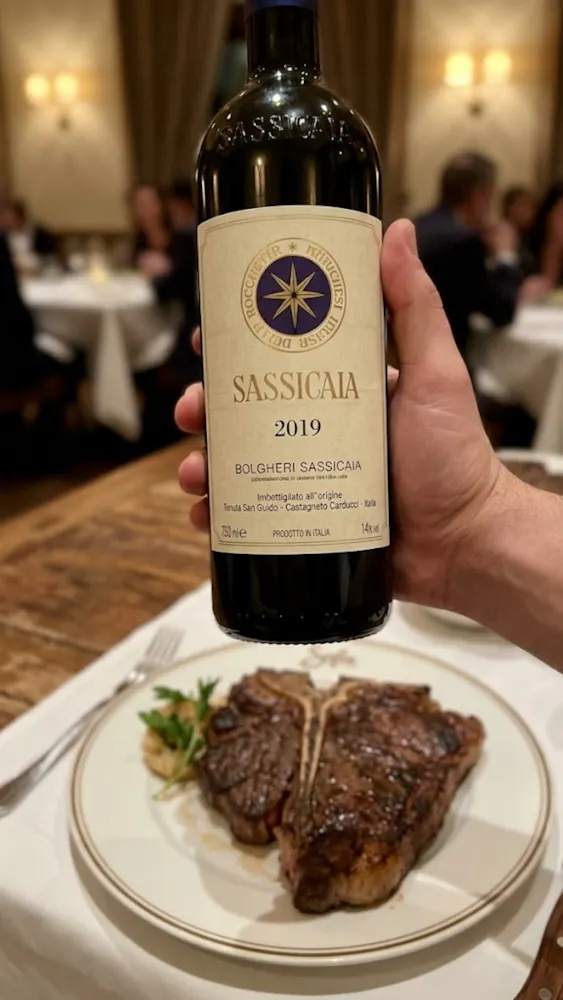
Pairing the Cuts — Sofia's Butcher Shop Menu, Bottle by Bottle
Sofia's Butcher Shop section is wood-fired, hand-selected, USDA Prime, and dry-aged. As Robb Report explains, dry-aging is a controlled enzymatic process that takes weeks and creates a depth of flavor wet-aged beef can't match. Each cut on the Sofia menu has a different fat content, texture, and flavor — which means each cut wants a slightly different wine.
Filet Mignon (8 oz or 12 oz, Butcher Board Cut)
The most tender cut, lean and elegant. Lower fat content means it doesn't need a heavy, high-tannin wine to cut through. Best pairings: Brunello di Montalcino (Biondi-Santi or Pian della Vigne), or a Chianti Classico Riserva (Marchese Antinori). Both have the structure to match the filet without overwhelming its subtlety.
Bone-in Ribeye Lollipop
Heavy marbling, deep flavor, the bone adding savory depth during cooking. Best pairings: Super Tuscans — Sassicaia, Ornellaia, or Tignanello. The Cabernet-driven structure handles the marbling; the Italian terroir matches the earthy notes from dry-aging.
Porterhouse for Two
A two-cut combination — filet on one side, NY strip on the other — designed for sharing. Best pairings: Amarone (Bertani) or Barolo (La Spinetta). Both have the body to handle the full range of the cut, and the structure to last across an entire meal.
14 oz Prime New York Strip
Firmer texture than ribeye, more flavor than filet, balanced. Best pairings: Crognolo (Tenuta Sette Ponti), Le Volte dell'Ornellaia, or Guidalberto (Tenuta San Guido). All three deliver Super Tuscan structure at more approachable price points.
Surf & Turf (Filet Mignon + Half Lobster)
A pairing challenge — the wine has to work with both the lean filet and the rich, buttery lobster. Best pairings: Le Difese (Tenuta San Guido) or a Pinot Noir (Belle Glos, Flowers). Both have the acidity to handle the lobster and the structure to match the filet.
Super Tuscans and the Dry-Aged Ribeye
The Super Tuscan with a dry-aged ribeye is one of the great fine dining pairings — and it's a natural anniversary or special-occasion bottle. Here's why the combination works so well.
The Bolgheri region in coastal Tuscany produces Cabernet Sauvignon-driven wines with a different character than Napa.
According to Bolgheri DOC, the region's distinct microclimate and gravelly soil produce wines with structure, elegance, and aging potential that distinguish them from both traditional Italian reds and Bordeaux. Sassicaia, the original Super Tuscan, set the template — Cabernet Sauvignon with Cabernet Franc, aged in French oak, built to age for decades.
Why Sassicaia Pairs With Ribeye
A dry-aged ribeye has the most marbling of any cut on the Butcher Shop menu. The fat content is high, the flavor is intense, and the wood-fired char adds smoke and bitterness that need balancing.
Sassicaia delivers tannin that cuts the fat, Italian earth that matches the dry-aging notes, and enough acidity to keep the palate fresh through a long meal. It's a bottle you order when the night calls for something serious.
Ornellaia and Tignanello as Alternatives
Ornellaia leans slightly richer than Sassicaia, with more Merlot in the blend — pairs beautifully with a heavier-marbled cut. Tignanello, from Antinori, leads with Sangiovese and adds Cabernet structure — works with everything but particularly shines with cuts that have more Italian-leaning seasoning.
When to Open the Bottle
A serious Super Tuscan deserves serious occasion. Anniversary dinners. A milestone client meal. The kind of celebration where the wine matters as much as the food.
Barolo, Brunello, and the Bigger Cuts
Barolo and Brunello sit at the heart of traditional Italian fine dining wine. Both are designed for serious meals, and both reward serious occasions like a special birthday celebration.
As Wine Folly's Barolo vs. Brunello guide explains, the two wines share aging potential and structural seriousness but come from different grapes and different regions. Barolo is 100% Nebbiolo from Piedmont in northwest Italy — rose petal, cherry, tar, leather.
Brunello is 100% Sangiovese from Tuscany — sour cherry, dried oregano, balsamic, tobacco. Both have firm tannin and elegant structure, but they paint with different flavor palettes.
Barolo With the Bone-In Cuts
Barolo's tannin handles richness. Pair it with the bone-in ribeye lollipop, or with a Porterhouse where the bone-in side contributes depth to the meal.
The La Spinetta Vigneto Garretti Barolo on Sofia's list is the bottle most likely to elevate one of these cuts.
Brunello With the Filet
Brunello has serious structure without Barolo's aggressive tannin. The Biondi-Santi Brunello — from the family that essentially invented Brunello in the 1880s — is the reference point. Pian della Vigne (Antinori) and Il Poggione are the other Brunello options on the Sofia list.
All three work with filet mignon, lamb chops, or any cut where elegance matters more than overwhelming richness.
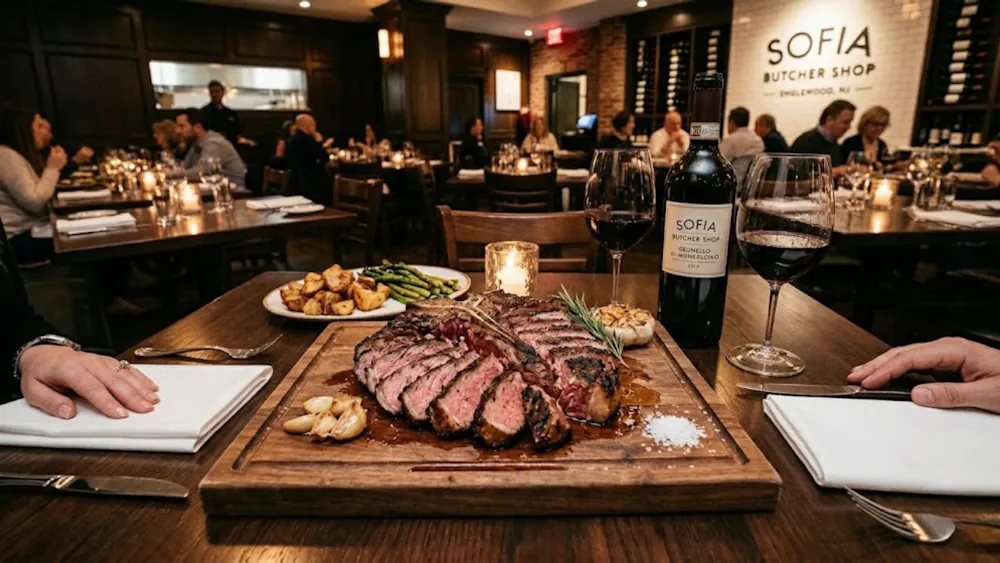
Amarone, Chianti, and Where They Earn Their Place
Amarone and Chianti Classico are the other two Italian categories worth knowing for steak pairings — different from Barolo and Brunello, but with their own roles to play.
The Wine-Searcher Bolgheri guide tracks the broader Italian wine landscape, and both Amarone and Chianti Classico Riserva carry deep traditions that pair beautifully with serious beef.
Amarone for the Heaviest Cuts
Amarone della Valpolicella is the richest Italian red in regular fine dining circulation. Made from partially dried Corvina grapes, it concentrates sugar and flavor — the result is a wine that runs 15-16% alcohol with raisin, fig, prune, and dark chocolate notes.
Pair Amarone with the heaviest, fattiest steaks: a deeply marbled Porterhouse, a wood-fired ribeye, anything where richness is the point. The Bertani Amarone (2012 vintage on Sofia's list) is one of the references.
Chianti Classico Riserva as the Versatile Option
Chianti Classico Riserva — Sangiovese with structure and age — is the versatile Italian red that works across a wider range of cuts. Lighter than Brunello, broader than Barolo, it pairs cleanly with filet, strip, and even the lighter end of the Butcher Shop menu.
The Marchese Antinori Chianti Classico Riserva (2021 on Sofia's list) is the go-to bottle. Great for a first or second date where you want a serious wine without going to the top of the list.
When to Lean American Instead
Italian wine is not the only correct answer. Sometimes American Cabernet is the right move, and a fine dining steakhouse should know when to lean which direction.
Sofia's wine list carries both Italian and American depth — Caymus, Cakebread, Far Niente, Joseph Phelps Insignia, Stag's Leap Artemis, Opus One, Quintessa — for exactly those moments.
As NJ Digest noted in its review, the balance of the wine program is one of the things that distinguishes Sofia from venues that lean too far one direction.
When Napa Cab Is the Right Answer
A few scenarios where American Cabernet wins. The guest at the table has a strong preference for fruit-forward, oak-driven, lower-acid wines.
The table is splitting a Surf & Turf where the lobster needs more body in the wine than Italian acidity might provide.
The occasion calls for the comfort of a familiar bottle rather than something to discuss. All three are valid reasons to skip the Italian section.
How to Have Both
For groups of four or more, the cleanest play is to order one Italian and one American bottle for the table.
A Brunello and a Caymus side by side give everyone optionality. The wine team at Sofia handles this kind of request constantly.
How to Order the Pairing at Sofia
The wine list at a serious fine dining venue can be intimidating. Here's how to make it work for you.
For larger groups and private events, the wine team can design a multi-bottle progression in advance.
Talk to the Wine Team
Don't try to navigate the list alone. Tell the sommelier or wine-knowledgeable server what you're ordering, what kind of wine you usually enjoy, and roughly what you want to spend.
They'll guide you to the right bottle without pushing you up to a tier you didn't ask about. The Wine Folly framework is useful as a foundation, but the staff knows what's drinking well right now from the actual stock — that's information no online guide can replace.
Ask About By-the-Glass Options
If the table can't commit to a full bottle, Sofia pours serious wines by the glass — Super Tuscan from Villa Antinori, Baby Barolo from Ceretto, Baby Amarone from Allegrini's Palazzo della Torre, and Chianti Classico from Terrarossa.
All four give you the Italian experience without the bottle commitment.
Match the Wine to the Cut, Not the Occasion
Order based on what the table is eating, not what the calendar says. A Tuesday dinner of filet mignon deserves the same Brunello an anniversary dinner does — the wine should match the food, not the day of the week.
Frequently Asked Questions
What's the best Italian wine with a dry-aged ribeye?
A Super Tuscan — Sassicaia, Ornellaia, or Tignanello. The Cabernet-driven structure cuts through the ribeye's marbling, and the Italian earth matches the dry-aging notes.
For a more approachable bottle, the Crognolo from Tenuta Sette Ponti or Le Volte dell'Ornellaia deliver Super Tuscan character at lower price points.
Is Barolo or Brunello better with steak?
Both work — they pair with different cuts. Barolo has more aggressive tannin and suits bone-in cuts (ribeye lollipop, Porterhouse).
Brunello has elegant structure and suits leaner cuts like filet mignon, lamb chops, and NY strip.
Should I order Amarone with steak?
Amarone belongs with the heaviest, fattiest cuts on the menu. A wood-fired Porterhouse, a heavily marbled ribeye, anything where richness is the defining quality.
Skip Amarone with leaner cuts — the wine will overwhelm them.
Can Italian wine replace American Cabernet entirely?
For most steak dinners, yes — Italian reds offer the tannin and structure American Cab provides, plus higher acidity and more savory complexity.
For diners who specifically prefer fruit-forward, oaky wines, American Cabernet remains the right call.
What's a good Italian wine for filet mignon?
Brunello di Montalcino is the classic answer — structured but elegant, doesn't overwhelm the lean cut.
Chianti Classico Riserva is a more accessible alternative with similar versatility.
How do I order wine without sounding like an amateur?
Describe what you're eating and what you usually enjoy, then let the wine team make recommendations.
Most fine dining staff prefer working from your actual preferences rather than wine vocabulary. Saying "we're sharing the Porterhouse and we like big reds, what would you suggest under $200?" gets you better service than trying to fake your way through the list.
Should I open Champagne with a steak meal?
Yes — but at the beginning of the meal, not with the steak itself. A bottle of Telmont, Moët, or Veuve to start sets the tone before the red wine arrives with the main course.
Plan Your Pairing Dinner at Sofia
The right wine doesn't just complement the steak — it changes the meal. The next time you book a fine dining steak dinner, skip the Napa Cabernet autopilot and try one of the Italian pairings above.
The combination of dry-aged USDA Prime beef and a serious Italian red is one of the most rewarding plays available on a fine dining menu.
About Sofia Englewood
Sofia is a fine dining Italian steakhouse in downtown Englewood, NJ. The Butcher Shop features wood-fired, hand-selected USDA Prime dry-aged steaks.
The wine list runs from Super Tuscans (Sassicaia, Ornellaia, Tignanello) through Brunello (Biondi-Santi, Pian della Vigne, Il Poggione), Barolo (La Spinetta), Amarone (Bertani), and Chianti Classico Riserva (Antinori) — plus deep American Cabernet representation from Caymus, Cakebread, Far Niente, Joseph Phelps, Stag's Leap, and Opus One.
For reservations and private events, call (201) 541-8530 or book online. Full menus and hours and location are on the site.