

What Makes House-Made Pasta Different: Inside a Fine Dining Italian Kitchen

The short version: House-made pasta is fresh pasta made in the restaurant rather than poured from a box — and the difference lands on the plate as texture, tenderness, and the way the noodle grips its sauce. At a fine dining Italian steakhouse like Sofia in Englewood, that means a ravioli that holds a lemon cream without turning to mush, a pappardelle wide enough to carry a filet mignon ragout, and a pasta section that stands shoulder to shoulder with the steaks.
That's the whole idea in a paragraph. The rest is the interesting part — why it's different, told through a few dishes that show it better than any definition could.
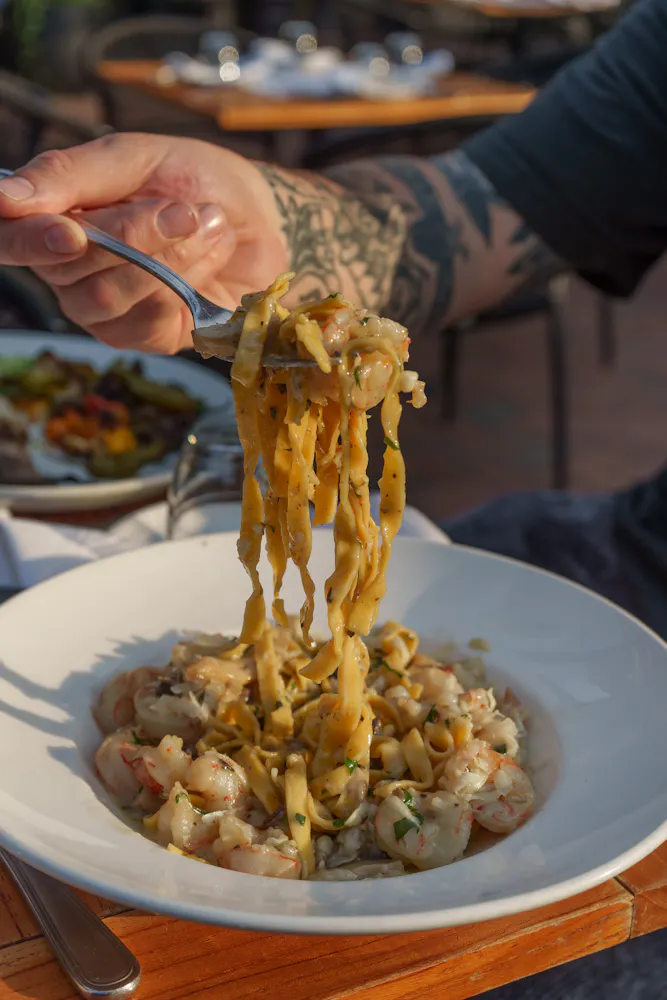
Start With a Plate of Pappardelle
Picture the Pappardelle at Sofia: wide, flat ribbons tangled with a porcini-and-filet-mignon ragout.
Now picture that same ragout on dried spaghetti from a box. Same sauce. Completely different dish.
Why the Pappardelle Works
The pappardelle works because the pasta was built for that sauce. Wide, fresh ribbons have the surface area and the soft texture to catch a heavy meat ragout. The sauce clings to the noodle instead of sliding off into a puddle at the bottom of the bowl.
Dried spaghetti, thin and slick, can't do that job. The ragout would slide right past it.
The Lesson Most People Miss
That's the first thing house-made pasta teaches: the pasta isn't a neutral vehicle for the sauce. The pasta is half the dish.
A fine dining Italian kitchen chooses a shape specifically to match what's going on top of it. When the pasta is made in-house, that matching gets deliberate — the kitchen isn't limited to whatever shapes come in a box.
So What Does "House-Made" Actually Mean?
House-made pasta is pasta made fresh in the restaurant's own kitchen, rather than bought dried off a shelf. The distinction sounds small. On the plate, it isn't.
Fresh and Dried Are Different Products
Fresh pasta is typically made from soft wheat flour and eggs, worked into a dough, rested, then rolled and cut the same day it's served.
Dried pasta — the box kind — is usually made from durum wheat semolina and water, extruded through machines, dried for storage, and shipped.
Both are legitimate. They're different products with different strengths, the way fresh bread and packaged bread are both bread but hardly the same thing.
Fresh Isn't Automatically "Better"
Here's the part worth being honest about, since a lot of restaurant marketing pretends otherwise: fresh is not automatically better than dried.
Dried pasta's firmer bite is genuinely superior for certain dishes. A good dried spaghetti holds an al dente snap that fresh pasta can't match — which is exactly why so many classic Italian dishes call for it.
Fresh pasta wins where you want tenderness, a silky texture, and a surface that grips a rich sauce. A serious kitchen knows which to reach for. The mark of a fine dining Italian steakhouse isn't that everything is fresh — it's that the choice is intentional. For more on what separates that kind of intention from ordinary cooking, our casual vs. fine dining guide covers the broader principle.
Where Fresh Pulls Ahead: A Side-by-Side
The clearest way to see the difference is to put the two next to each other. Neither wins outright — they win at different things.
Fresh / House-Made Pasta | Dried / Boxed Pasta | |
Made from | Soft wheat flour + eggs, usually | Durum semolina + water, usually |
Texture | Tender, silky, delicate | Firm, chewy, springy al dente |
Cook time | Very fast — 2–4 minutes | Slower — 8–12 minutes |
Best with | Cream sauces, butter, ragù, delicate fillings | Olive-oil sauces, tomato, seafood, sharp bites |
Sauce grip | High — porous surface holds sauce | Lower — slicker surface |
Signature dishes | Ravioli, pappardelle, fettuccine | Spaghetti, rigatoni, penne, bucatini |
The advantage | Tenderness and sauce-clinging | Structural bite and versatility |
Read across that table and the "which is better" question answers itself: it's the wrong question. The right one is which does this particular dish need — and that's what a fine dining kitchen answers every time it builds a plate.
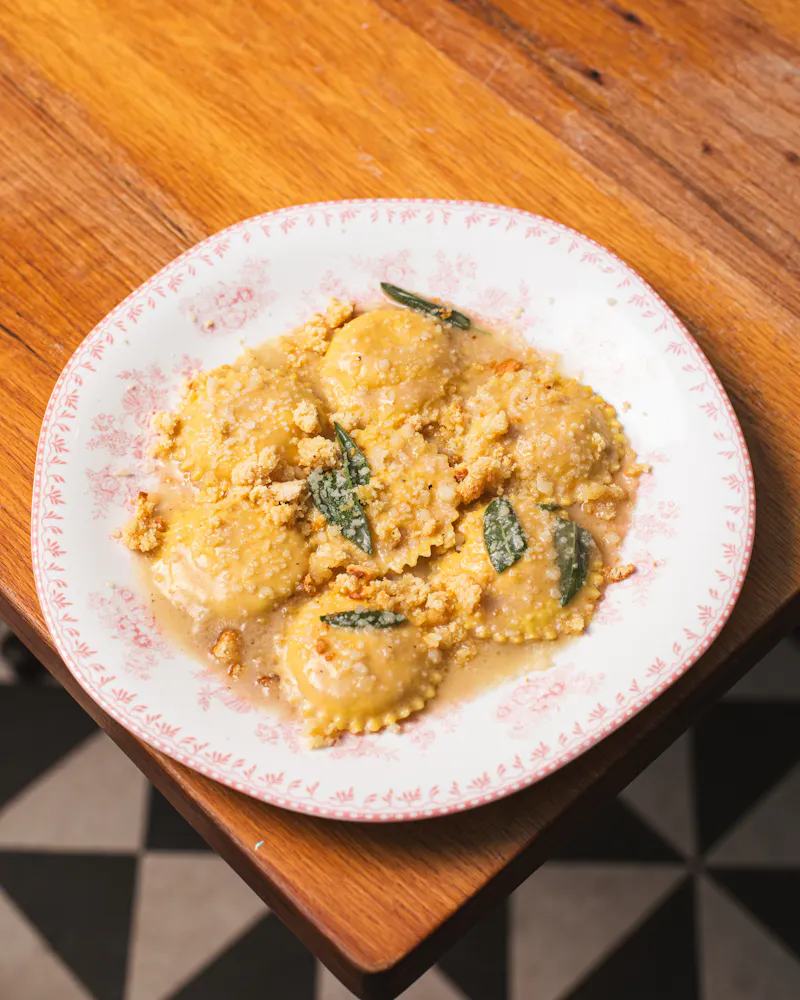
The Ravioli Test
If pappardelle shows why shape matters, ravioli shows why freshness matters. With a filled pasta, there's nowhere to hide.
The Wall and the Center
Sofia's Ravioli al Limone is homemade ricotta ravioli in a creamy lemon sauce. A filled pasta like this is nearly impossible to do well from a box.
The whole point is the contrast between a thin, tender pasta wall and a soft ricotta center. Fresh dough can be rolled thin enough that the pasta nearly disappears around the filling — you taste ricotta and lemon first, pasta second.
A thicker, tougher wrapper flips that. Suddenly you're chewing through dough to get to the point.
The Sauce Does the Rest
The lemon-cream sauce is the other half of the argument. Fresh pasta's porous surface drinks up a cream sauce, so the sauce and the pasta become one thing rather than sauce sitting on top of noodle.
There's a small luxury flourish available here that shows how the kitchen thinks: the ravioli can be finished with an add-on of Kaluga caviar, a briny pop against the lemon and cream. Our caviar guide covers how that fits the broader raw bar program.
You don't garnish a mediocre dish with caviar. The add-on is a tell — the pasta underneath can carry it.
Why the Shape Is a Decision, Not a Default
Once a kitchen makes its own pasta, shape becomes a lever it can pull. Every classic pairing of shape to sauce exists for a physical reason.
Here's the logic at a glance, using dishes off Sofia's menu:
Pasta Shape | Why It Works | On Sofia's Menu |
Wide ribbons (pappardelle) | Surface area catches heavy, chunky ragù | Filet mignon + porcini ragout |
Long strands (spaghetti) | Twirls and carries lighter seafood sauces | Spaghetti Lobster, fra diavolo |
Ridged tubes (rigatoni) | Ridges and hollows trap clingy, spicy sauce | Lobster Spicy Rigatoni |
Flat strands (fettuccine) | Flat surface holds silky cream evenly | Rock shrimp, mushroom, black truffle |
Filled (ravioli) | Tender wall against a rich center | Ravioli al Limone |
None of It Is Arbitrary
Each pairing is a small physics problem solved. Heavy sauce needs surface area. Delicate seafood needs a strand that won't overwhelm it. Spicy, chunky sauce needs somewhere to lodge.
A kitchen making its own pasta gets to solve those problems on purpose, dish by dish — instead of reaching for whatever the box aisle happened to offer.
The Steakhouse Advantage
Sofia is a fine dining Italian steakhouse, and that shapes the pasta in a way a straight-ahead trattoria's wouldn't.
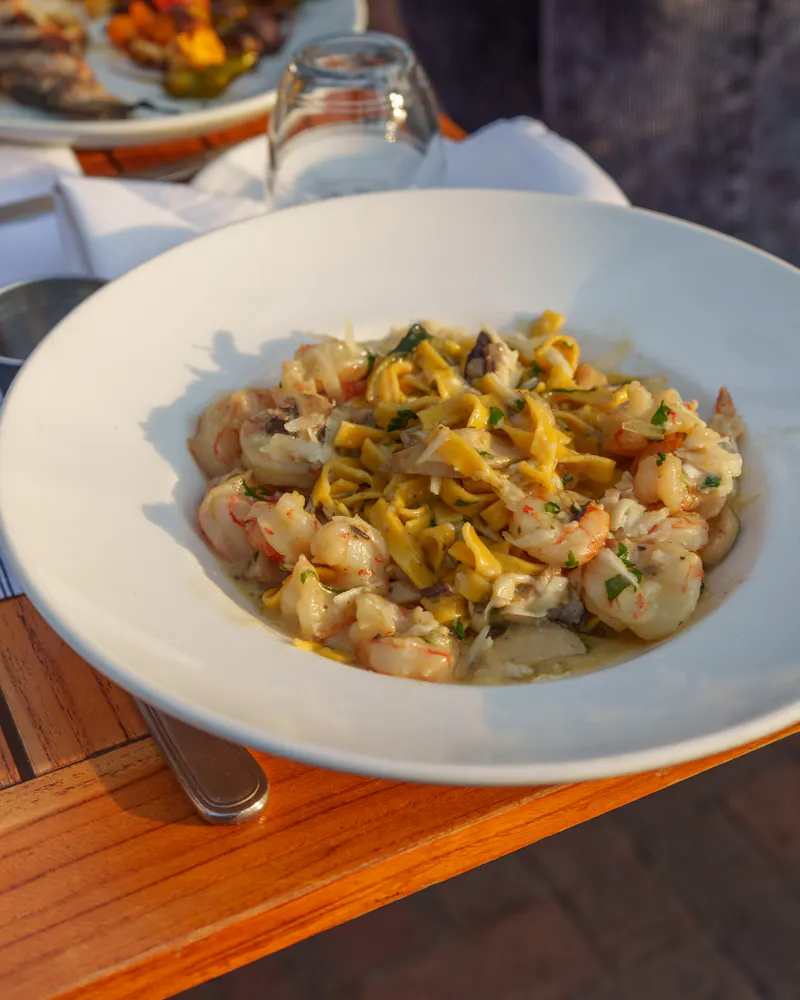
Where the Steak Meets the Pasta
The kitchen's access to prime beef and daily seafood shows up right in the pasta section. The pappardelle is built on filet mignon. The spaghetti carries split Canadian lobster. The fettuccine leans on rock shrimp and black truffle.
That's the steakhouse pantry feeding the pasta station — the same sourcing behind the dry-aged steaks turning up as a filet ragù on a plate of ribbons.
Two Kitchens in One
The result is a pasta program that eats like a serious Italian restaurant's and a steakhouse's at once. You can open with a pasta course and follow with a dry-aged cut, the full Italian-steakhouse arc — a range that's part of why Bergen County diners increasingly skip the trip across the bridge, as our Bergen County vs. Manhattan guide lays out.
A Note on Alternative Pastas
House-made doesn't only mean traditional egg pasta. A serious kitchen also handles the diners who need something else.
Sofia's menu includes gluten-free, whole grain, red lentil, and zucchini pasta options. That range matters for a table where one guest eats gluten-free and another doesn't — nobody has to sit out the pasta course.
It's a quiet marker of a well-run kitchen: the alternatives aren't an afterthought bolted onto the menu, they're built in.
How to Order Pasta at a Fine Dining Italian Steakhouse
A few practical notes for getting the most out of the pasta section.
Treat It as a Course, Not a Main
In the Italian tradition, pasta is often a middle course — the primo — not the centerpiece. Ordering a pasta to share between the table, then moving to a steak or seafood main, gives the meal its full shape.
That's especially true for a celebration dinner. Our anniversary guide covers building that kind of multi-course evening.
Match the Wine to the Sauce
The pasta's sauce, more than the pasta itself, drives the wine pairing. A cream-and-lemon ravioli wants something crisp and bright; a filet-and-porcini pappardelle wants a structured red.
Our Italian wine and steak pairing guide walks through the logic, and most of it carries straight over to the pasta course.
Ask What's Made In-House
If you're not sure what's fresh versus dried on a given menu, ask. At a serious kitchen the staff will know, and the answer tells you where the kitchen is putting its effort. The dishes built on house-made pasta are usually the ones worth ordering.
The Takeaway
House-made pasta isn't a marketing line — it's a decision a kitchen makes course by course, shape by shape, sauce by sauce. The difference shows up as tenderness, as sauce that clings instead of slides, as a ravioli wall thin enough to disappear around its filling.
At a fine dining Italian steakhouse, that care is the whole point. The pasta section isn't filler between the appetizers and the steaks. Done right, it's a reason to come in.
About Sofia Englewood
Sofia is a fine dining Italian steakhouse in downtown Englewood, NJ, recognized by NJ Digest for "timeless elegance coupled with modern culinary excellence." The house-made pasta program includes Ravioli al Limone, Spaghetti Lobster, Fettuccine with rock shrimp and black truffle, Pappardelle with filet mignon and porcini ragout, and Lobster Spicy Rigatoni, plus gluten-free, whole grain, red lentil, and zucchini options. The kitchen also serves wood-fired USDA Prime dry-aged steaks, daily-flown seafood, caviar service, and a curated Italian-and-American wine list.
For reservations and private events, call (201) 541-8530 or book online. Full menus and hours and location are on the site.
Quick Questions
What is house-made pasta?
House-made pasta is fresh pasta made in a restaurant's own kitchen — usually from soft wheat flour and eggs, rolled and cut the day it's served — rather than bought dried off a shelf. Sofia in Englewood makes its pasta in-house, including ravioli, pappardelle, fettuccine, and more.
Is fresh pasta better than dried?
Not automatically — they suit different dishes. Fresh pasta is tender and grips rich cream sauces and ragù; dried pasta has a firmer al dente bite that's better for olive-oil, tomato, and seafood dishes. A serious kitchen chooses based on the dish.
What pasta shape goes with what sauce?
Wide ribbons like pappardelle suit heavy meat ragù; long strands like spaghetti suit seafood and oil-based sauces; ridged tubes like rigatoni trap chunky, spicy sauces; flat fettuccine holds cream sauces; and filled ravioli pairs a tender wall with a rich center.
Where can I get house-made pasta in Bergen County?
Sofia, a fine dining Italian steakhouse in Englewood, serves house-made pasta including Ravioli al Limone, Spaghetti Lobster, and Pappardelle with filet mignon ragout, with gluten-free and alternative options available.