

The Steakhouse Burger: Why a Dry-Aged Blend Is a Different Animal

Key Takeaways
- A dry-aged burger tastes different before anything is added to it. Ground from the trim of a dry-aging program, the beef carries the same concentrated, nutty depth that makes dry-aged steak worth ordering.
- The Sofia Prime Burger sits in the Butcher Shop section of the dinner menu, listed alongside the Porterhouse and the ribeye — not in a sandwich section. That placement is deliberate.
- Judge a burger from the bottom up. The beef and the grind decide almost everything; the bun and toppings can only support or ruin what the meat already is.
Where the Burger Sits on the Menu
Read Sofia's dinner menu and you'll find the Prime Burger listed under The Butcher Shop — the same heading as the Porterhouse, the bone-in ribeye, and the 14 oz New York strip.
Not a sandwich section. Not a bar-snack section. The steak section.
That's a statement about where the beef comes from. A steakhouse burger made properly isn't a separate product bought in — it's made from the same program that produces the steaks, which is why it belongs on the same part of the menu.
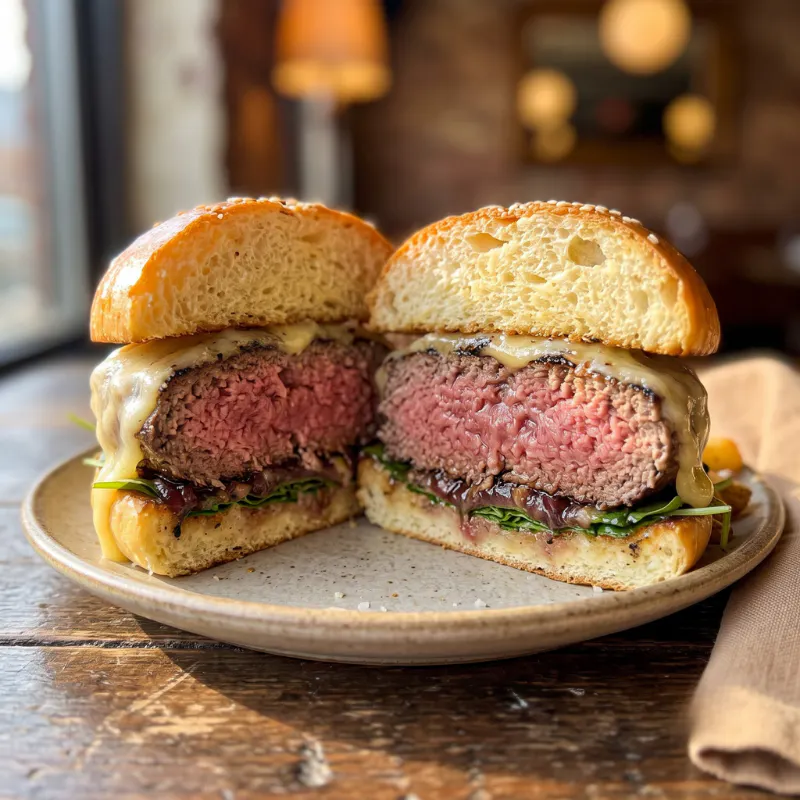
Start at the Bottom: The Beef
Everything about a burger is decided here. Bun, cheese, and toppings can support good beef or hide bad beef, but they can't improve it.
What "Dry-Aged Blend" Actually Means
A dry-aging program produces trim. When a kitchen ages whole cuts for weeks, it then trims away the hardened outer crust and squares off the primals before portioning steaks — and that trim is intensely flavored beef.
Grinding it produces a burger with the concentrated, nutty, faintly funky character of dry-aged meat. Our guide to dry-aging covers the process in full, but the short version: moisture leaves, flavor concentrates, enzymes tenderize.
A restaurant that dry-ages steaks in-house has this trim available. One that buys pre-cut steaks doesn't — which is why most burgers, including expensive ones, taste like plain ground beef.
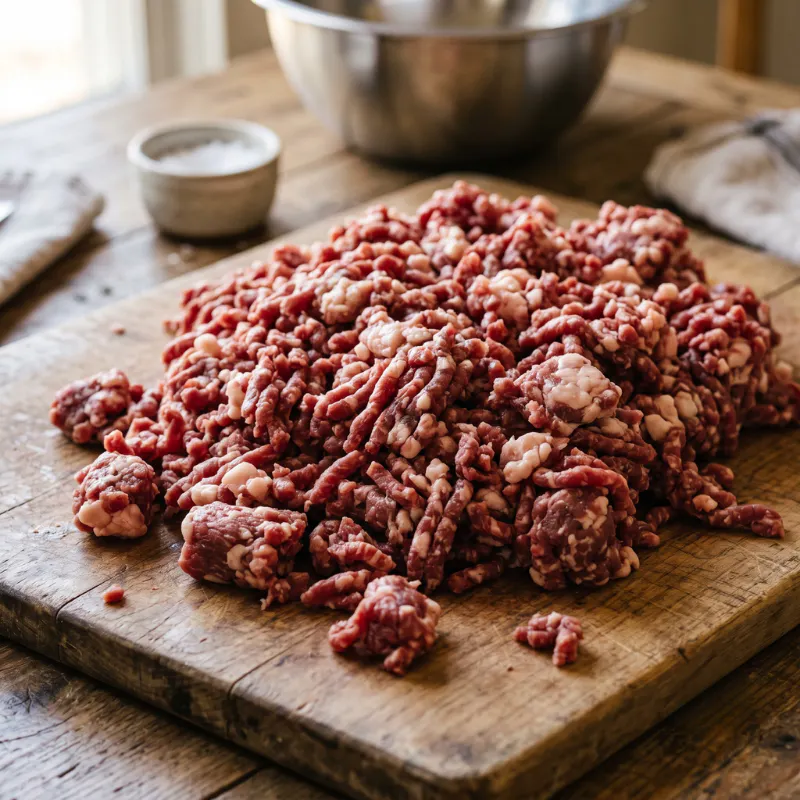
Why the Blend Is a Blend
"Blend" signals that more than one cut goes into the grind, which is how a serious burger is built.
Different cuts contribute different things. Chuck brings deep beef flavor and good fat. Short rib brings richness. Brisket brings a distinct beefiness and fat that renders well. Sirloin brings leaner structure. A well-composed blend balances flavor, fat content, and texture rather than relying on a single cut to do everything.
The target most kitchens aim for is roughly 20% fat — enough to keep the patty juicy through a hard sear without turning greasy.
Size Is a Choice, Not a Boast
Eleven ounces is a substantial patty, and the size determines how it can be cooked.
A thin patty has to be cooked through; there's no interior to protect. A thick one can be seared hard on the outside while the center stays at temperature — which is the entire point of using quality beef. You order a dry-aged burger medium or medium-rare, and a thick patty is what makes that possible.
The Cheese: Why Gruyère
American cheese melts better than anything and tastes of very little. Cheddar is sharper and more assertive. Gruyère does something different.
An Alpine cheese, gruyère melts smoothly without breaking, and brings a nutty, faintly sweet, slightly savory flavor that runs parallel to the nuttiness dry-aging produces in beef. The two characteristics rhyme rather than compete.
It's a choice that only makes sense if the beef underneath has character worth complementing. On a generic patty, gruyère is just an expensive cheese.
Four Tells on Any Burger
Useful anywhere, not just here.
Tell | What good looks like | What it means |
Where it sits on the menu | Listed with the steaks | The beef comes from the steak program |
Doneness offered | You're asked how you want it | Quality beef, ground in-house |
The crust | Dark, uneven sear across the surface | High direct heat, not a flat-top at low temp |
The topping count | Restrained — cheese and little else | Confidence in the beef |
The Doneness Question Is the Big One
If a restaurant asks how you'd like your burger cooked, that tells you something. Kitchens grinding their own beef from whole cuts they control can offer a medium-rare burger. Kitchens using pre-ground beef of unknown origin generally cook everything through, and should.
Being asked is a signal about sourcing, not service.
Restraint, Again
The same principle that runs through the wood-fired pizzas applies here. A burger buried under six toppings is usually compensating.
Dry-aged beef and gruyère is a short list. Short lists are confident.
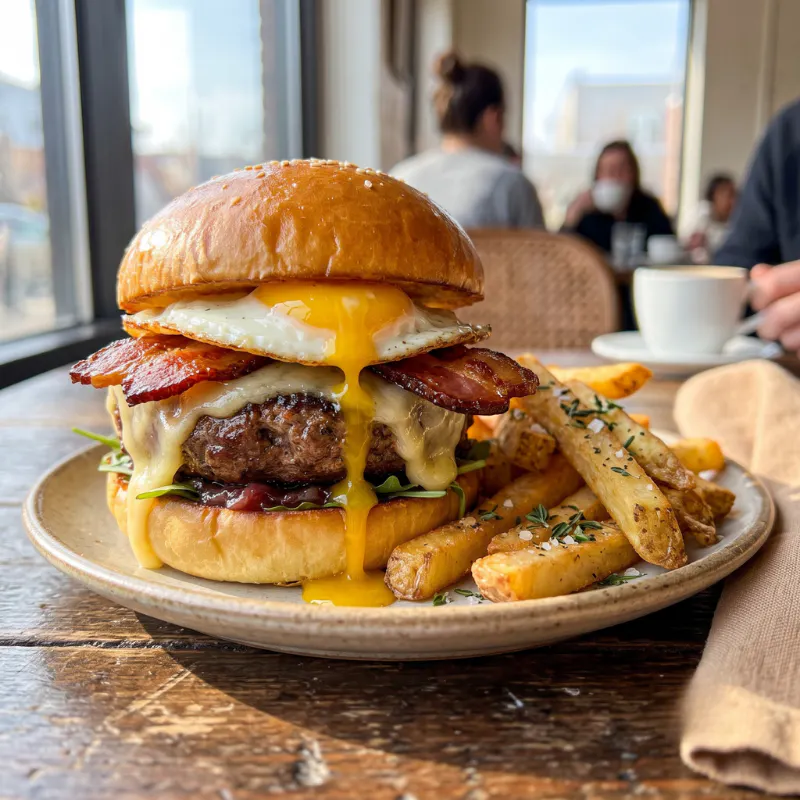
The Other Two Burgers
The Prime Burger isn't the only one on the menu, and the variations are worth knowing.
The Recovery Burger — brunch only. Prime beef, bacon, fried egg, gruyère. The name is doing exactly what you think. The fried egg adds richness and a yolk that acts as its own sauce, and the whole thing is built for a Sunday that started slowly. It sits within Sofia's weekend brunch menu.
The Salmon Burger — lunch. Faroe Island salmon, arugula, tomato, balsamic horseradish mayo. A genuine alternative rather than a token one, built on the same salmon the kitchen serves as an entrée.
When to Order the Burger
There's a version of this question that assumes the burger is the lesser choice at a steakhouse. It isn't — it's a different choice.
At lunch. Fast, substantial, and one of the better things to order when the afternoon is booked. It comes with fries, and it fits comfortably inside a business lunch timeline.
At the bar. The burger appears on the happy hour menu, which makes it the natural pairing for a drink after work rather than a full sit-down meal.
At dinner, when you don't want a whole steak. An 11 oz burger with the flavor profile of dry-aged beef delivers most of what a steak delivers, in a form that leaves room for a starter and dessert.
At brunch. The Recovery Burger version, for the mornings that warrant it.
Quick Questions
What is a dry-aged burger?
A dry-aged burger is made from beef ground from the trim of a dry-aging program. As whole cuts age for weeks, moisture leaves and flavor concentrates, so the trim carries the same nutty, concentrated character as dry-aged steak. Sofia in Englewood serves an 11 oz burger made from a dry-aged blend.
Why does dry-aged beef taste different?
During dry-aging, moisture evaporates and natural enzymes break down muscle fibers, concentrating flavor and tenderizing the meat. The result is beefier, nuttier, and more complex than fresh ground beef.
What does "blend" mean on a burger menu?
A blend means the patty is ground from more than one cut of beef — often some combination of chuck, brisket, short rib, or sirloin — to balance flavor, fat, and texture rather than relying on a single cut.
Why is gruyère used on a steakhouse burger?
Gruyère melts smoothly without breaking and brings a nutty, faintly sweet flavor that complements the nuttiness of dry-aged beef. It's a choice that works specifically because the beef underneath has character worth matching.
Can you order a burger medium-rare?
At restaurants that grind their own beef from whole cuts, yes — being asked how you want your burger cooked is a signal that the kitchen controls its sourcing. A thicker patty, such as an 11 oz one, is what makes a proper medium-rare possible.
Where can I get a good burger in Bergen County?
Sofia, a fine dining Italian steakhouse in Englewood, NJ, serves an 11 oz Prime Burger made from a dry-aged blend with gruyère, listed in the Butcher Shop section of its dinner menu alongside the steaks, and also available at lunch and happy hour.
About Sofia Englewood
Sofia is a fine dining Italian steakhouse in downtown Englewood, NJ, recognized by NJ Digest for "timeless elegance coupled with modern culinary excellence." The Sofia Prime Burger — 11 oz of dry-aged blend with gruyère — is listed in the Butcher Shop section alongside hand-selected USDA Prime dry-aged steaks, and is available at dinner, lunch, and happy hour, with a Recovery Burger version at weekend brunch. The kitchen also serves house-made pasta, daily-flown seafood, a raw bar with caviar service, and a curated Italian-and-American wine list.
For reservations and private events, call (201) 541-8530 or book online. Full menus and hours and location are on the site.