

Dolci and Digestivo: How an Italian Meal Is Meant to End

Key Takeaways
- An Italian meal ends in two acts, not one. Dolci — the dessert course — comes first, and a digestivo follows: a bitter or fortified drink meant to settle the meal rather than sweeten it further.
- Bitterness is the point. Amaro, grappa, and aged port all work after a rich dinner because they cut through richness rather than piling more sugar on top of it.
- The last twenty minutes are the part most people skip and the part Italians protect. Rushing out after the main course means leaving the best-designed portion of the meal on the table.
The Meal Doesn't End at the Main Course
American dining treats dessert as optional and whatever follows it as unnecessary. The check arrives, the table turns, everyone leaves.
Italian dining treats the end of the meal as a designed sequence. After the mains come the dolci. After the dolci comes something to drink — bitter, herbal, or fortified — and then, eventually, coffee. The whole stretch can run half an hour, and none of it is filler.
There's a symmetry to it. The meal opened with an aperitivo, a bittersweet drink built to wake up the appetite — the tradition our aperitivo guide covers. It closes with a digestivo, built to do the opposite. Bitter to open, bitter to close, the meal bracketed at both ends.

Dolci — The Italian Dessert Course
Dolci simply means "sweets," and a good Italian dessert menu runs across a few distinct families. Knowing them makes ordering easier.
The Custards and Creams
Soft, cool, and restrained — the counterweight to a heavy meal.
Panna Cotta is the archetype: vanilla custard cream set just firm enough to hold, served with fresh berries. Nothing hides in a panna cotta, which is why it's a good test of a kitchen. Sofia's version is also marked gluten free.
Gianduja Parfait works the same register in a richer key — hazelnut chocolate parfait with dark chocolate ganache, chocolate matcha crumble, and vanilla gelato. Gianduja is the Piedmontese hazelnut-chocolate tradition that eventually gave the world Nutella.
The Frozen
Spumoni di Banana brings dolce latte gelato together with caramelized banana, candied pecan, and caramel sauce. Spumoni is a Neapolitan layered-ice-cream tradition, and the caramelized fruit gives it warmth against the cold. Also gluten free.
Gelato and sorbetto on their own remain the simplest, most Italian close available — and the right call when the meal has already been substantial.
The Cakes and Puddings
Tiramisu needs no introduction: ladyfingers, mascarpone, a touch of espresso. The most exported Italian dessert in the world, and still excellent when made properly rather than assembled from a tub.
Sticky Toffee Pudding is the British interloper on an Italian menu, and it earns its place — moist date sponge, English toffee sauce, dulce de leche ice cream. Rich enough that it demands a digestivo afterward.
Berry Mousse goes lighter: mixed berry mousse, berry compote, cinnamon crumble, dark chocolate, fresh berries.
The Pastry
Cannoli — creamy ricotta, pistachio, chocolate chips — is Sicily's contribution and the one dessert that should always be filled to order, never in advance. A soggy shell means it sat.
Crostata di Pesche is the seasonal tart: almond tart crust, vanilla custard, poached peaches, torched meringue, and coconut lime sorbet.
And the Chocolate Soufflé, prepared à la minute, which is a different kind of dessert entirely — one we cover in its own piece.
Then Comes the Digestivo
Here's where most American diners stop and most Italians are just getting comfortable.
A digestivo is a drink taken after the meal, traditionally believed to aid digestion. Whether the folk pharmacology holds up matters less than what the drink does at the table: it slows everything down, cuts the richness of what you've eaten, and gives the evening a proper ending rather than an abrupt stop.
Why Bitter Works After Eating
The instinct after a sweet dessert is to reach for something sweeter. Italian tradition goes the other way.
Bitter and herbal flavors reset a palate coated in fat, sugar, and salt. After a plate of dry-aged steak and a rich dessert, a small glass of something bitter clears everything and leaves you feeling settled rather than heavy.
The rule of thumb: the bigger the meal, the more bitter the finish should be.
Amaro, Grappa, Limoncello — Reading the After-Dinner List
Italian after-dinner drinks fall into a few categories, and they're not interchangeable.
Amaro
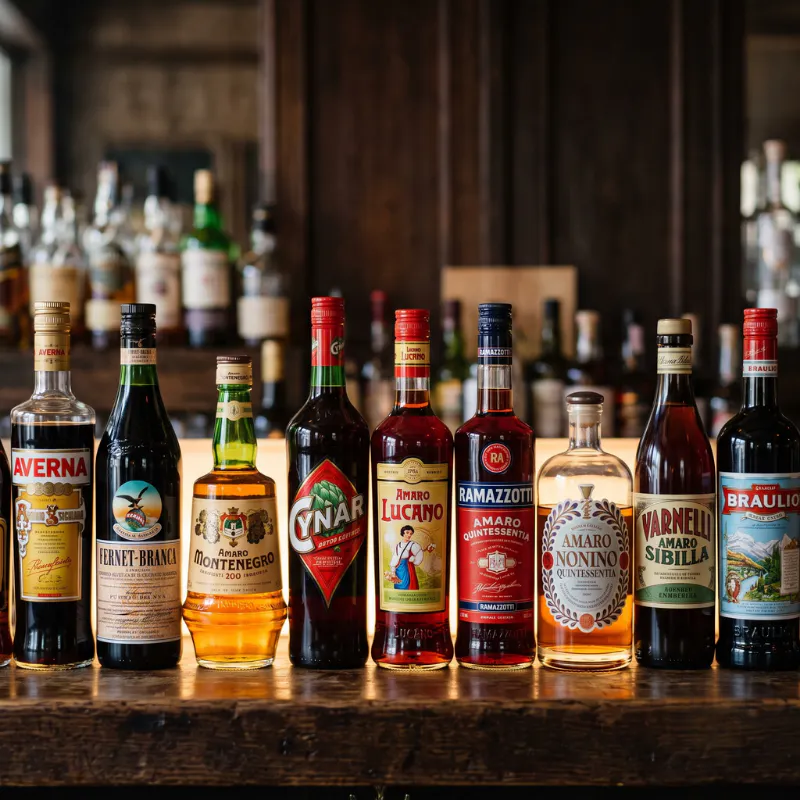
Amaro means "bitter," and it covers a broad family of herbal liqueurs made by infusing botanicals — roots, bark, citrus peel, herbs — into alcohol. Each producer guards its own recipe.
They vary enormously in intensity:
- Montenegro — floral, orange-forward, the gentle entry point
- Averna — sweeter, with caramel and cola notes
- Lucano — herbal and balanced
- Cynar — made with artichoke, vegetal and dry
- Fernet Branca — the aggressive end, intensely medicinal and mentholated, adored by people who work in restaurants
- Amaro Nonino — grappa-based and elegant, the refined choice
Start with Montenegro or Averna if amaro is new to you. Work toward Fernet.
Grappa
Grappa is distilled from the grape skins, seeds, and stems left after winemaking — the pomace. Traditionally a farmer's spirit made from what was left over, now refined into something serious.
It runs clear, potent, and grape-forward. Sofia carries Nonino, Banfi, and Sassicaia grappa, the last from the same estate behind one of Italy's most celebrated wines — which our wine pairing guide gets into.
Grappa is an acquired taste and a genuine one. Sip it, don't shoot it.
Limoncello and the Sweeter End
Limoncello — lemon peel steeped in alcohol, sweetened, served cold — is the Amalfi Coast classic and the easiest after-dinner drink to love. Bright, sweet, and cold enough to be refreshing after a heavy meal.
The wider sweet category runs through Sambuca (anise, served with coffee beans in the traditional presentation), Disaronno (amaretto, almond-scented), Frangelico (hazelnut), and Grand Marnier (orange cognac liqueur).
Choose these when the meal was lighter or when bitter isn't your thing.

Port, and the Longer Finish
Outside the Italian canon but firmly inside the tradition of ending well, tawny port is one of the great after-dinner pours.
Fortified and barrel-aged, tawny port develops nutty, caramelized, dried-fruit character as it ages. Sofia pours Taylor Fladgate at ten, twenty, and thirty years — a genuine progression, with each step adding concentration and complexity.
Port is the drink for a longer finish, and it's the natural partner for a cigar downstairs in the lounge, which our cigar lounge guide covers. A twenty-year tawny and a good cigar is a hard evening to improve on.
Pairing Dessert to Drink
If you ordered | Reach for | Why |
Panna Cotta or Berry Mousse | Limoncello or Moscato | Light dessert, light finish |
Tiramisu | Sambuca or espresso | Coffee meeting coffee |
Cannoli | Amaro Montenegro | Orange against ricotta and pistachio |
Sticky Toffee Pudding | Tawny port, twenty year | Caramel to caramel |
Gianduja Parfait | Frangelico or Amaro Nonino | Hazelnut echoing hazelnut |
Chocolate Soufflé | Ruby-toned port or grappa | Enough weight to meet the chocolate |
Nothing at all | Fernet Branca or Cynar | The digestivo as the dessert |
That last row deserves emphasis. Skipping dessert and ordering only a digestivo is completely legitimate, and after a substantial meal it's often the better call.
Why the Last Twenty Minutes Matter
The end of a meal is where the conversation usually gets good.
The food is finished, nobody's studying a menu, the pressure of the evening has lifted. What's left is a table, a small glass of something, and time. Italians protect that window deliberately — it's the payoff for everything that came before.
Rushing it costs you the best part. A meal that ends the moment the mains are cleared is a transaction. One that ends with dolci, a digestivo, and twenty unhurried minutes is an evening — which is exactly what makes it worth doing for an anniversary or any occasion you want to remember.
Quick Questions
What is a digestivo? A digestivo is an after-dinner drink in the Italian tradition, typically bitter, herbal, or fortified, meant to settle a meal. Common examples include amaro, grappa, limoncello, and port. It's the counterpart to the aperitivo taken before eating.
What is the difference between aperitivo and digestivo? An aperitivo is a light, bittersweet drink taken before a meal to stimulate the appetite, like an Aperol Spritz. A digestivo is taken after the meal to settle it, and tends to be stronger and more bitter or herbal — amaro, grappa, or port.
What is amaro? Amaro is a family of Italian herbal liqueurs whose name means "bitter." Each is made by infusing botanicals such as roots, bark, and citrus peel into alcohol. They range from gentle and orange-forward, like Montenegro, to intensely medicinal, like Fernet Branca.
What do Italians drink after dinner? Italians typically drink a digestivo — amaro, grappa, limoncello, or a fortified wine like port — followed by espresso. Bitter and herbal flavors are preferred after a meal because they cut richness rather than adding more sweetness.
What is dolci? Dolci means "sweets" in Italian and refers to the dessert course. An Italian dolci menu typically spans custards like panna cotta, frozen desserts like gelato and spumoni, cakes like tiramisu, and pastries like cannoli.
Where can I get Italian dessert in Bergen County? Sofia, a fine dining Italian steakhouse in Englewood, NJ, serves a full dolci menu including panna cotta, tiramisu, cannoli, spumoni di banana, and a chocolate soufflé prepared à la minute, alongside a deep after-dinner list of amaro, grappa, limoncello, and aged tawny port.
About Sofia Englewood
Sofia is a fine dining Italian steakhouse in downtown Englewood, NJ, recognized by NJ Digest for "timeless elegance coupled with modern culinary excellence." The dolci menu includes panna cotta, tiramisu, cannoli, spumoni di banana, gianduja parfait, sticky toffee pudding, and a chocolate soufflé prepared à la minute, with several gluten-free options. The after-dinner list runs through amaro, grappa, limoncello, and Taylor Fladgate tawny ports, and the downstairs cigar lounge extends the evening further.
For reservations and private events, call (201) 541-8530 or book online. Full menus and hours and location are on the site.