

Dishes Built for Two: The Return of the Large Format

Key Takeaways
- Large-format dishes are returning as small plates lose ground. Chefs surveyed by the James Beard Foundation for 2026 predicted more large-format entrées, noting that not everyone wants to share everything.
- A big dish does something a row of small ones cannot — it becomes a centerpiece, it gets carved or split at the table, and it makes an ordinary dinner feel like an occasion.
- Sofia's menu is built for it: a Porterhouse for two, wild-caught whole fish, seafood towers, split lobster over spaghetti, and Surf & Turf.
The Pendulum Swings Back
For most of the last decade, the default at a new restaurant was small plates. Order six things, share everything, graze across the table.
The format had real virtues and one persistent flaw: people left hungry and unsure what they'd eaten.
Chefs are calling it. In the James Beard Foundation's 2026 trend forecast, one chef predicted a shift toward larger-format entrées, observing that not everyone wants to share, while another said restaurants would veer homey and saucy and big. The same piece noted a narrowing tolerance for meals that leave diners unfull.
Steakhouses never left this behind. The Porterhouse for two has been on menus for a century.
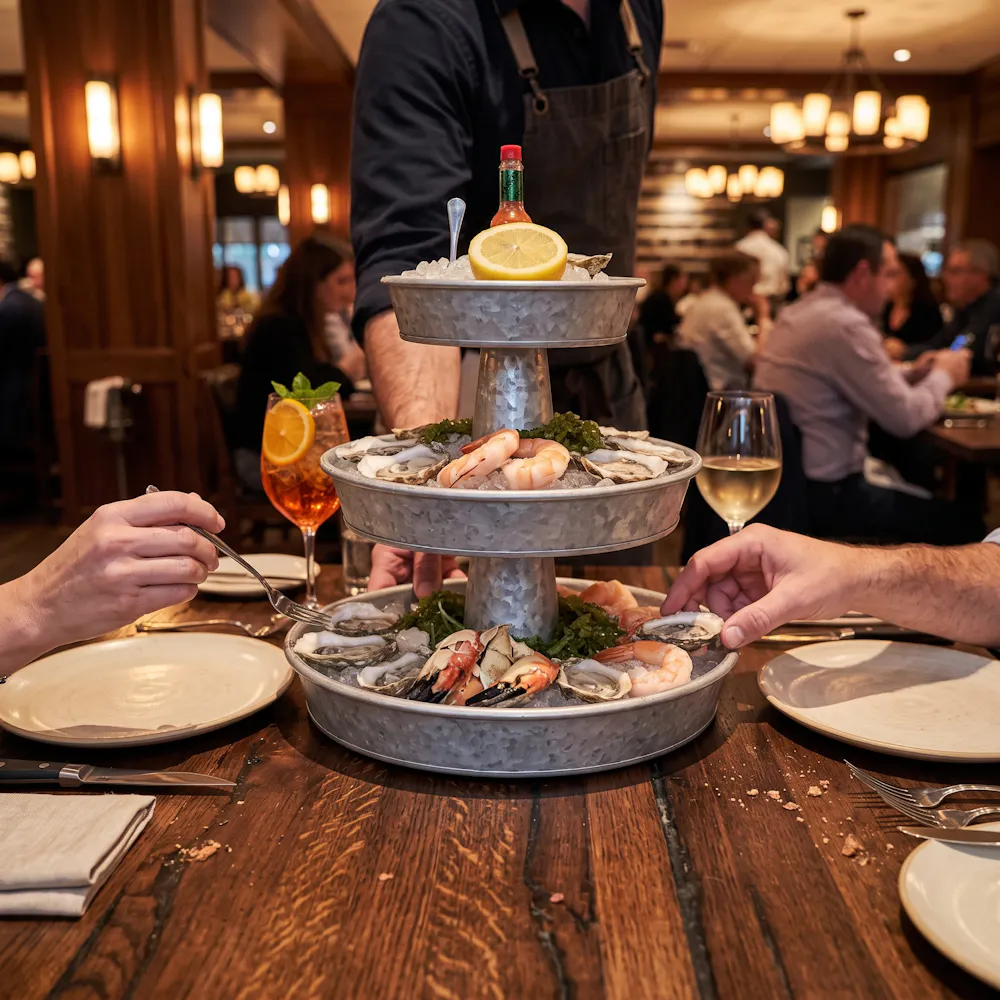
What a Big Dish Does
It creates a centerpiece
A whole fish arrives intact. A tower of shellfish lands on the table and reorganizes it. A Porterhouse for two comes out on a board.
None of that happens with six small plates arriving at intervals. The dish becomes the event, and the table turns toward it.
It gets divided in front of you
Carving, splitting, portioning — all of it happens at the table rather than in the kitchen. Our whole fish guide covers the technique, and there's a reason it survives.
The division is a small ritual, and rituals are what people remember about meals.
It tastes better
Cooking large is genuinely better cooking. A whole fish stays moist because bone and skin protect the flesh. A big cut of beef can take a hard sear while the interior stays where you want it — the mechanics our dry-aging guide gets into.
Portioning before cooking removes those advantages.
It settles the ordering problem
Two people, one dish, no negotiation. Nobody orders wrong, nobody has food envy, and the whole table eats the same excellent thing.
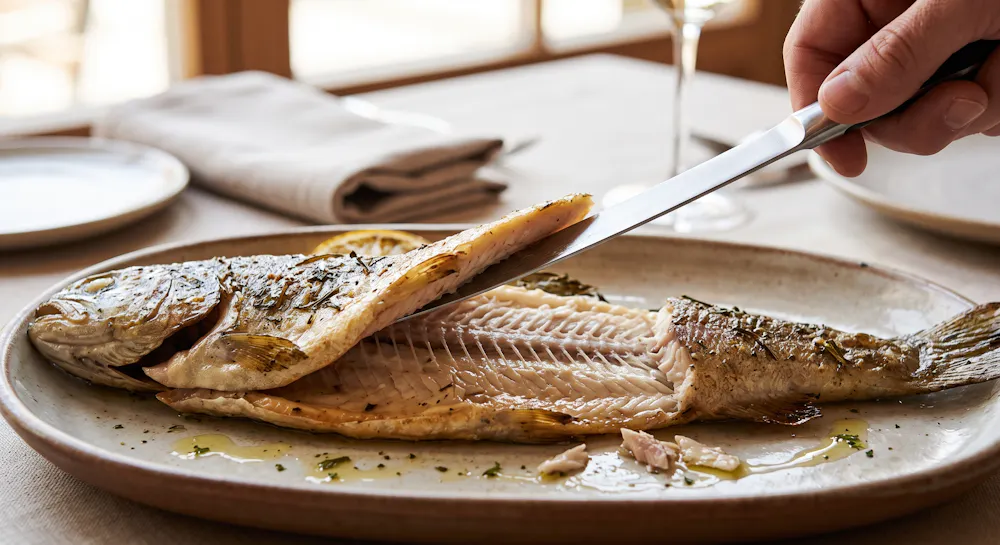
The Large Format at Sofia
The Porterhouse for two. The classic — filet on one side of the bone, strip on the other, one cut with two characters.
Whole market fish. Wild-caught Red Snapper from Florida, Black Sea Bass from the Atlantic, or Branzino from Greece, grilled or livornese.
Whole Canadian lobster. From 1.5 lbs and up, steamed, broiled, angry, or cognac. Our lobster guide covers all eight preparations on the menu.
The seafood tower. Lobster, oysters, little neck clams, colossal shrimp, seafood salad. The most theatrical opening available.
Spaghetti Lobster. A split 1.5 lb lobster laid over pasta in fra diavolo.
Surf & Turf. Charred half lobster and an 8 oz filet on one plate.
Ordering Large Without Overordering
One large format, not two. A Porterhouse for two and a whole fish is too much food for two people. Pick the centerpiece, then build around it.
Open cold, go big warm. Oysters or a tower first, then the large plate. Our oyster guide covers ordering across the varieties.
Sides are shared by default. Two or three for the table, not one each.
Ask how it's served. Carved tableside, portioned in the kitchen, or brought whole — worth knowing before it lands.
Wine with weight. A large format wants a bottle rather than glasses, and something structured. Our pairing guide covers the Italian side of the list.
When It's the Wrong Call
Large format needs two people who eat similarly. A vegetarian and a steak eater need separate plates, and our guide to ordering without steak covers that scenario.
It also needs time. A whole fish carved at the table is a slower meal, which is wonderful on an anniversary and wrong before a show.
And it needs appetite. Two people who want a light dinner should order two light dinners.
Questions
What is a large-format dish?
A large-format dish is a single large plate meant to be shared between two or more diners, such as a Porterhouse for two, a whole roasted fish, or a seafood tower. It replaces individual entrées with one centerpiece.
Why are large-format dishes becoming popular again?
Chefs surveyed by the James Beard Foundation for 2026 predicted a shift toward larger-format entrées, driven partly by diners tiring of small-plate menus that leave them unfull and partly by a broader move toward generous, comforting food.
What large-format dishes does Sofia serve?
Sofia in Englewood, NJ serves a Porterhouse for two, wild-caught whole market fish, whole Canadian lobster from 1.5 lbs, seafood towers, split lobster over spaghetti, and Surf & Turf.
How much food is a Porterhouse for two?
A Porterhouse for two is sized as a shared main course for two diners, containing both a filet and a strip portion divided by the bone. Most tables add shared sides rather than additional entrées.
Is a whole fish enough for two people?
Generally yes. A whole fish yields two fillets once portioned, which makes it a natural shared main course rather than a single serving.
About Sofia Englewood
Sofia is a fine dining Italian steakhouse in downtown Englewood, NJ. The menu carries large-format dishes throughout — a Porterhouse for two from the wood-fired USDA Prime dry-aged Butcher Shop, wild-caught whole market fish, whole Canadian lobster, seafood towers, and Surf & Turf — alongside house-made pasta and a curated Italian-and-American wine list.
For reservations and private events, call (201) 541-8530. Full menus and hours and location are on the site.