

A Guide to Caviar Service: How to Order and Enjoy It at a Fine Dining Restaurant

Key Takeaways
- Caviar service is one of fine dining's great rituals — salt-cured sturgeon roe, served cold with traditional accompaniments and eaten in a specific way. Sofia in Englewood offers Kaluga and Imperial Ossetra with the full traditional service.
- The essentials are simple once you know them: the types of caviar and how they differ, the classic accompaniments, the proper way to taste it, and what to drink alongside. None of it is complicated — it just rewards knowing the ritual.
- Caviar suits the occasions that call for something memorable — an anniversary, a celebration, the opening of a special dinner. It's the fine dining move that turns an ordinary evening into an event from the first course.
Caviar carries a reputation for being intimidating, and that keeps a lot of people from ordering it. The prices, the ritual, the sense that there's a right and wrong way to eat it — all of it can feel like a test you didn't study for. There's no test. Caviar service is a simple pleasure wrapped in a bit of tradition, and once you understand the basics, ordering it becomes one of the more rewarding things you can do at a fine dining table.
What do you actually need to know before ordering caviar? Less than you'd think. The type, the accompaniments, how to taste it, and what to drink alongside — that covers it. Below is a complete guide to caviar service at a fine dining restaurant, from the different varieties to the proper way to enjoy them, with a look at the caviar service at Sofia in Englewood.
What Caviar Service Actually Is
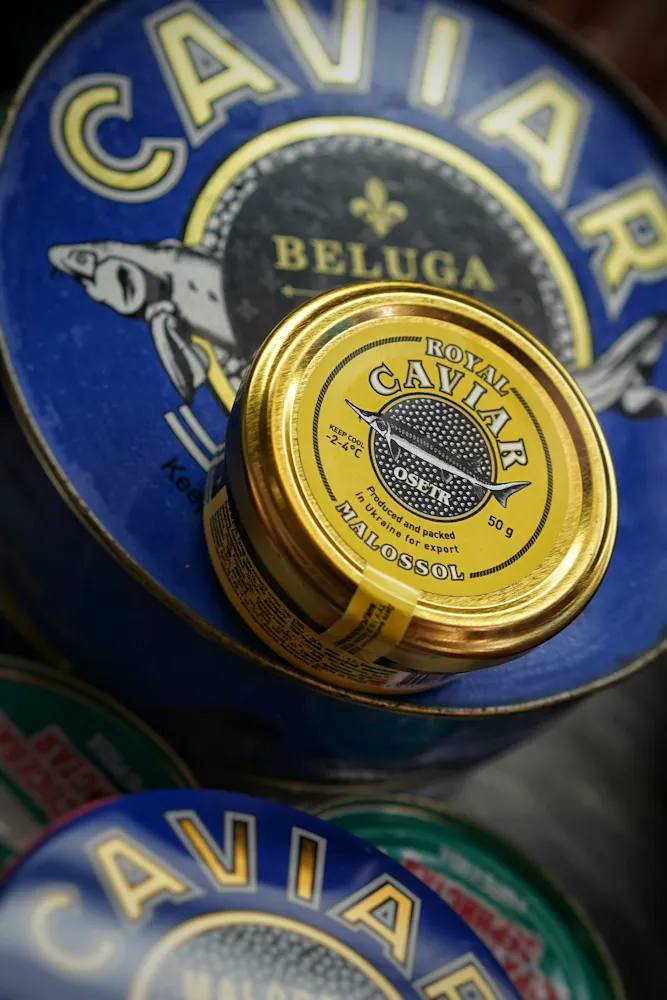
Caviar is the salt-cured roe (eggs) of sturgeon, served cold as a delicacy. True caviar comes specifically from sturgeon; other fish roe — salmon, trout, whitefish — is technically roe but not caviar in the traditional sense.
Caviar service is the ritual of presenting and eating it. At a fine dining restaurant, caviar arrives as a formal presentation — the caviar itself, kept cold, alongside a set of traditional accompaniments and specific serving tools. The service is part of the experience; the caviar isn't just plated and dropped, it's presented as an occasion.
The Elements of the Service
A proper caviar service includes:
- The caviar itself — a measured portion, served cold, often over ice to keep it at temperature
- Traditional accompaniments — blinis, crème fraîche, and a set of garnishes
- The right tools — traditionally a mother-of-pearl spoon, never metal
- The presentation — served formally, as the opening statement of the meal
Why It Signals Fine Dining
Caviar is one of the clearest markers of a serious fine dining kitchen. It requires sourcing from quality purveyors, proper cold storage and handling, the correct accompaniments and tools, and staff who know how to present it. A restaurant that does caviar service properly is signaling a level of seriousness — which is part of what separates genuine fine dining from the rest, a distinction our casual vs. fine dining guide covers in depth.
The Main Types of Caviar — and How They Differ
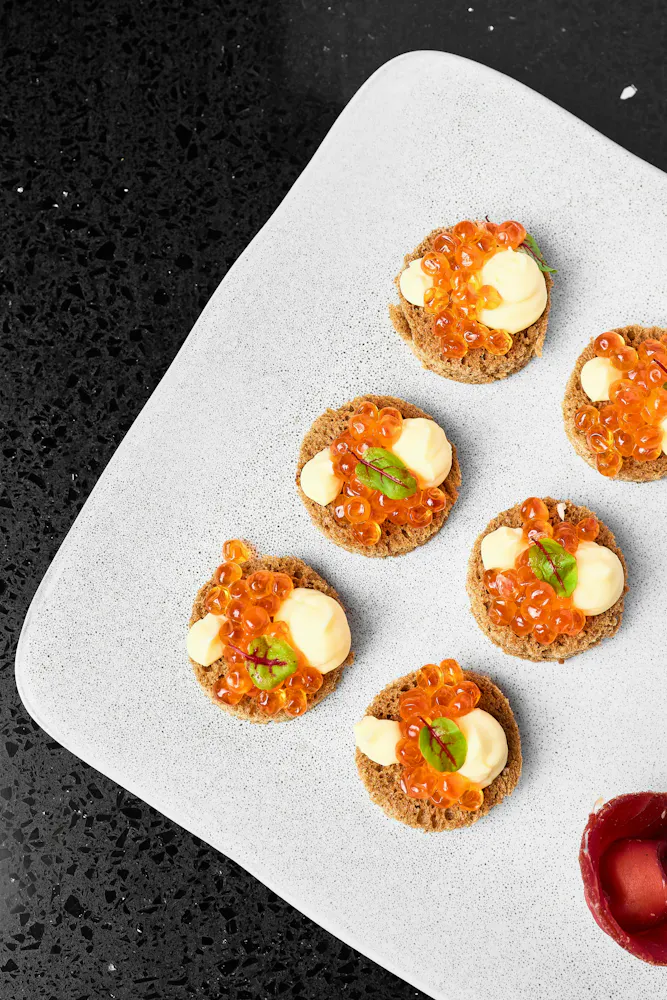
Not all caviar is the same. The type comes from the species of sturgeon, and each has its own character — size, color, texture, and flavor.
The Classic Varieties
The caviar world centers on a few main types:
- Beluga — the largest, rarest, and traditionally most prized eggs, from the beluga sturgeon; soft, large pearls with a delicate, buttery flavor
- Ossetra (also Osetra) — medium-sized eggs from the ossetra sturgeon, ranging from brown to gold, with a nutty, rich flavor; among the most popular for its balance of quality and character
- Sevruga — smaller eggs with a stronger, more intense flavor
- Kaluga — from the kaluga sturgeon, often called "river beluga"; large, glossy pearls with a smooth, buttery flavor that rivals beluga, and one of the most sought-after varieties available today
A Note on Sustainability
Much of the caviar served today is farmed rather than wild-harvested, a shift driven by conservation. Wild sturgeon populations were heavily depleted, and responsible aquaculture now produces high-quality caviar sustainably. Farmed Kaluga and Ossetra, in particular, have become the standard at serious restaurants — delivering the quality of the classic varieties without the conservation concerns of wild harvesting.
How to Choose
For someone newer to caviar, Ossetra is often the recommended starting point — its nutty, balanced flavor is approachable and represents the classic caviar experience. Kaluga is the move for those wanting the large, buttery, beluga-like pearls. The best approach at a restaurant is to ask what they carry and how the varieties differ, then choose based on the flavor profile that appeals to you.
The Traditional Accompaniments
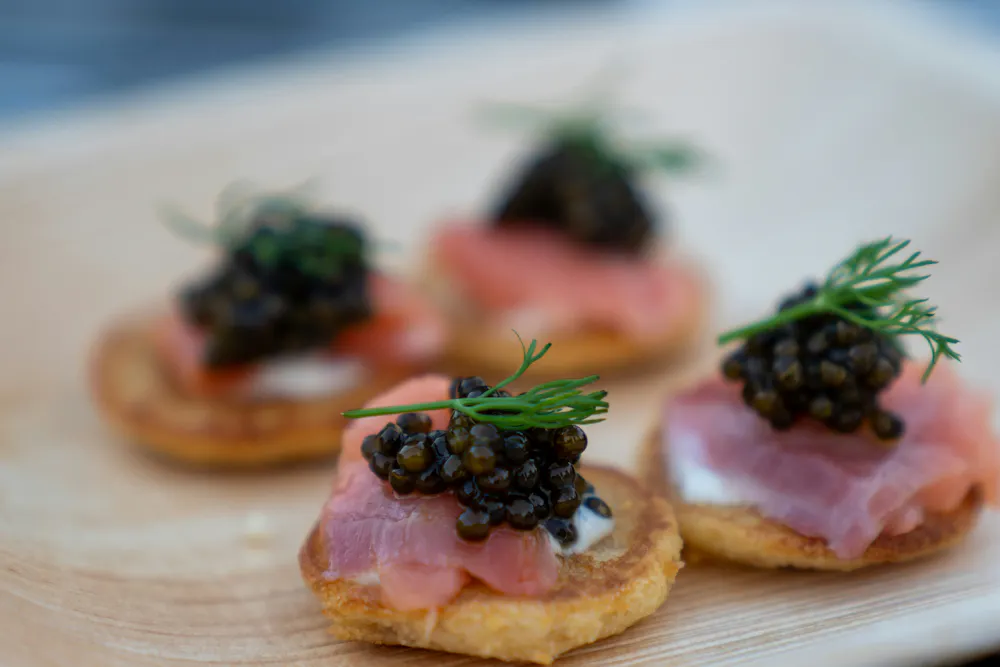
Caviar is traditionally served with a specific set of accompaniments, each of which plays a role. The classic spread has been refined over generations.
The Classic Set
Traditional caviar accompaniments include:
- Blinis — small, soft buckwheat pancakes that serve as the base
- Crème fraîche — the cool, tangy dairy that balances the salt of the caviar
- Crumbled egg — hard-boiled egg, whites and yolks separated or combined, for richness
- Chives and scallions — for a mild onion note and freshness
- Shallots — finely minced, for a sharper allium bite
At Sofia, the caviar service comes with exactly this traditional spread — homemade blinis, chives, scallions, crumbled egg, shallots, and crème fraîche — the full classic presentation.
How the Accompaniments Work Together
Each accompaniment serves a purpose. The blini provides a neutral, soft base. The crème fraîche adds coolness and tang that offsets the salt. The egg adds richness. The alliums — chives, scallions, shallots — add brightness and a mild sharpness that cuts through the richness of the roe. Together they frame the caviar without overwhelming it.
A Question of Restraint
The key with accompaniments is restraint. The caviar is the star; the accompaniments support it. A common beginner mistake is loading up the blini so heavily that the caviar disappears under everything else. A light touch — a little crème fraîche, a small amount of caviar, a sparing garnish — lets the caviar remain the focus.
How to Eat Caviar Properly
There's a proper way to eat caviar, and while no one's grading you, following the ritual genuinely improves the experience.
The Mother-of-Pearl Spoon
Caviar is traditionally eaten with a mother-of-pearl, bone, or gold spoon — never metal. Metal reacts with the caviar and imparts a faint metallic taste that interferes with the delicate flavor. Mother-of-pearl is neutral, preserving the pure taste of the roe. When your caviar arrives with a small, pale spoon, that's why.
The Two Approaches
There are two accepted ways to eat caviar:
- Straight — a small amount directly from the spoon, placed on the back of the hand (the spot between thumb and forefinger) or eaten directly, to taste the caviar entirely on its own
- On a blini — a small blini topped with a little crème fraîche and a modest portion of caviar, the classic composed bite
Purists often taste the first bite straight to appreciate the caviar unadorned, then move to blinis for the fuller experience. Both are correct.
Tasting It Right
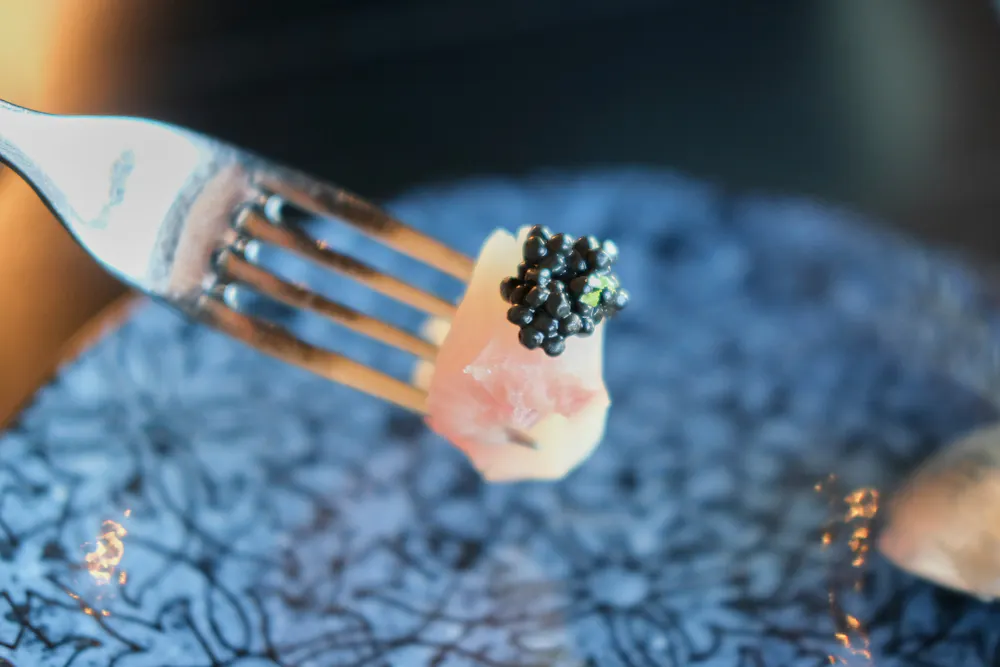
When you taste caviar, let the pearls rest on your tongue for a moment before gently pressing them against the roof of your mouth. The eggs pop, releasing their flavor — briny, buttery, nutty, complex. Rushing it or chewing aggressively misses the point. Caviar rewards a slow, attentive bite.
What to Drink With Caviar
The right drink elevates caviar, and two classics dominate for good reason.
Champagne
Champagne is the traditional and near-perfect caviar pairing. The high acidity and fine bubbles cut through the richness and salt of the roe, cleansing the palate between bites. A dry, crisp Champagne — Brut or Blanc de Blancs — is the classic choice. Sofia's Champagne program runs from approachable options through prestige bottles, giving plenty of range for the pairing. For the logic of pairing drinks to food more broadly, our Italian wine and steak pairing guide covers the same principles applied to the main course.
Vodka
The other traditional pairing is ice-cold vodka, the Russian and Eastern European classic. Served neat and very cold, quality vodka's clean, neutral character doesn't compete with the caviar — it provides a crisp, palate-clearing counterpoint. For a traditional caviar experience, chilled premium vodka is the authentic choice.
Other Options
Beyond the two classics, a crisp, dry white wine can work — a Blanc de Blancs Champagne's still cousins, like a steely Chablis or a mineral-driven white. The guiding principle is the same: high acidity, clean flavor, nothing that competes with the delicate roe. Avoid heavy reds, oaky whites, or sweet wines, which overwhelm the caviar.
Caviar as Part of the Raw Bar
Caviar rarely arrives alone. At a fine dining Italian steakhouse, it sits at the top of a broader raw bar program, and understanding how they fit together enriches the experience.
The Raw Bar Context
A serious raw bar offers a range of cold seafood — oysters, clams, shrimp, lobster, and often a composed seafood tower. Caviar is the crown of this program, the most luxurious option among a spread built around fresh, cold, pristine seafood. Sofia's raw bar includes oysters, clam and shrimp cocktails, lobster, and a seafood tower built with lobster, oysters, little neck clams, colossal shrimp, and seafood salad.
Building an Opening Course
For a special meal, the raw bar and caviar together make a memorable opening. A seafood tower to share, caviar service to start, a glass of Champagne — it's the kind of opening that announces the evening as an occasion. The cold, briny, luxurious spread sets a tone that the rest of the meal builds on.
Caviar Add-Ons
Beyond the standalone service, caviar often appears as an add-on to other dishes — a spoonful atop a pasta, a garnish on a raw bar item. Sofia offers caviar add-ons on certain dishes, like its Ravioli al Limone, letting the luxury of caviar enhance a dish without a full service. It's a way to bring caviar into the meal in a smaller, integrated form.
When to Order Caviar — the Occasions It Suits
Caviar suits certain moments better than others. Knowing when to order it makes it feel right rather than forced.
The Occasions
Caviar belongs to the meals that mark something:
- Anniversaries — the celebration of a milestone, where an opulent opening fits the occasion; our anniversary dinner guide covers building a special-occasion meal
- Milestone birthdays — a special birthday that calls for the full experience
- A significant celebration — an engagement, a promotion, a major achievement
- An impressive business dinner — where caviar signals that the occasion, and the client, matter
- A special date — when you want to make an evening genuinely memorable
The Everyday Luxury
Caviar doesn't strictly require an occasion, though. Part of its appeal is as a spontaneous luxury — the decision to make an ordinary evening extraordinary, to open a dinner with something special for no reason beyond wanting to. Ordered that way, caviar becomes a small, deliberate act of indulgence rather than a formal ritual reserved for milestones.
Matching the Portion to the Table
Caviar is typically ordered by weight, and a modest portion goes a long way as an opening course to share. For a table wanting a taste of the experience, a single service shared among the table is often enough. For a group making caviar a centerpiece, larger portions or multiple services suit. The staff can guide the portion based on your table and how you're using it.
Caviar Service at Sofia
Sofia's caviar service brings the full traditional experience to Englewood, as part of its broader fine dining and raw bar program.
What Sofia Offers
Sofia serves two caviar varieties: Kaluga and Imperial Ossetra. Kaluga delivers the large, buttery, beluga-like pearls that make it one of the most sought-after caviars available; Imperial Ossetra brings the classic nutty, rich flavor that defines the traditional caviar experience. Both come with the full traditional accompaniments — homemade blinis, chives, scallions, crumbled egg, shallots, and crème fraîche — served the proper way.
Part of a Larger Experience
The caviar sits within Sofia's fine dining program, which runs from the raw bar through wood-fired USDA Prime steaks, house-made pasta, and daily seafood. Caviar to open, a serious main course to follow, a deep wine list throughout — the full arc of a fine dining meal. That range is part of what makes Sofia a fine dining destination worth staying local for, a case our Bergen County vs. Manhattan guide lays out.
The Setting
Caviar service suits Sofia's rooms — the main dining room, the Garden Room, or a private event space for a celebration. Recognized by NJ Digest for "timeless elegance coupled with modern culinary excellence," the setting matches the occasion that ordering caviar tends to mark.
Frequently Asked Questions
What is caviar service?
Caviar service is the formal presentation and eating of caviar — salt-cured sturgeon roe — at a fine dining restaurant. It includes the caviar served cold, traditional accompaniments like blinis and crème fraîche, and proper tools such as a mother-of-pearl spoon. Sofia in Englewood offers caviar service with Kaluga and Imperial Ossetra.
How do you eat caviar properly?
Caviar is eaten with a mother-of-pearl, bone, or gold spoon — never metal, which affects the taste. Take a small amount either straight to taste it alone, or on a blini with a little crème fraîche. Let the pearls rest on your tongue and gently press them to release the flavor rather than chewing aggressively.
What are the different types of caviar?
The main types of caviar come from different sturgeon species: Beluga (the largest, rarest pearls), Ossetra (medium, nutty, and popular), Sevruga (smaller, stronger flavor), and Kaluga (large, buttery pearls often called "river beluga"). Sofia serves Kaluga and Imperial Ossetra.
What do you drink with caviar?
The two classic caviar pairings are Champagne and ice-cold vodka. Champagne's high acidity and bubbles cut through the richness, while cold, neutral vodka provides a clean counterpoint. Both preserve the delicate flavor of the caviar without competing with it. Crisp, dry white wines can also work.
Why is caviar served with a mother-of-pearl spoon?
Caviar is served with a mother-of-pearl, bone, or gold spoon because metal reacts with the roe and imparts a metallic taste that interferes with the delicate flavor. Mother-of-pearl is neutral, preserving the pure taste of the caviar.
What's the difference between Kaluga and Ossetra caviar?
Kaluga comes from the kaluga sturgeon and has large, glossy, buttery pearls often compared to beluga. Ossetra comes from the ossetra sturgeon, with medium-sized eggs and a nutty, rich flavor. Kaluga is prized for its large pearls and smooth texture; Ossetra for its classic, balanced flavor. Sofia serves both.
Where can you get caviar in Bergen County?
Sofia, a fine dining Italian steakhouse in Englewood, offers caviar service in Bergen County, with Kaluga and Imperial Ossetra served with traditional accompaniments. It's part of a raw bar program that also includes oysters, seafood towers, and other cold seafood.
How much caviar do you need per person?
A modest portion of caviar goes a long way as a shared opening course. For a table wanting a taste of the experience, a single service shared among the table is often enough; for a group making caviar a centerpiece, larger or multiple portions suit. The restaurant's staff can guide the portion based on your table.
Plan Your Caviar Experience at Sofia
Caviar service is one of fine dining's true pleasures, and there's nothing intimidating about it once you know the ritual. Choose your variety, keep the accompaniments restrained, use the right spoon, pair it with Champagne or cold vodka, and take the bite slowly. Whether it opens a celebration or simply makes an ordinary evening extraordinary, caviar is the fine dining move worth knowing.
About Sofia Englewood
Sofia is a fine dining Italian steakhouse in downtown Englewood, NJ, recognized by NJ Digest for "timeless elegance coupled with modern culinary excellence." Sofia's caviar service features Kaluga and Imperial Ossetra with traditional accompaniments — homemade blinis, chives, scallions, crumbled egg, shallots, and crème fraîche — as part of a raw bar that includes oysters, seafood towers, and cold seafood. The kitchen also serves wood-fired USDA Prime dry-aged steaks, house-made pasta, daily seafood, and a curated Italian-and-American wine list with a deep Champagne selection.
For reservations and private events, call (201) 541-8530 or book online. Full menus and hours and location are on the site.